![[Supermarket Industry Check ③] "Detergent, Beer, and Ice Cream All Taken Away"... Neighborhood Marts Avoid 'Coupang' and Make a Last Stand with 'Vegetables', Summer Peak Season is a Thing of the Past](https://d1gl51xbrxoj65.cloudfront.net/uploads/2026/01/12/1768261492880-rhb67.webp)
The paradoxical reality of procuring manufactured goods through 'Coupang Biz' "The winning move is ultimately fresh food"... Competitiveness in vegetables and fruits determines mart survival
"In the past, there was even a saying that we could make a living off of one summer season of sales. Beer, snacks, detergent, fabric softener, and ice cream sold like hotcakes. However, Coupang and specialty discount stores have now taken all of that market."
This is the lament of a retail industry insider. The sales formula of supermarkets that protected neighborhood commercial districts is changing completely. As they lose the manufactured goods and processed food markets to online platforms and convenience stores, supermarkets are risking their lives on their last bastion, 'fresh food (Grocery),' to survive.
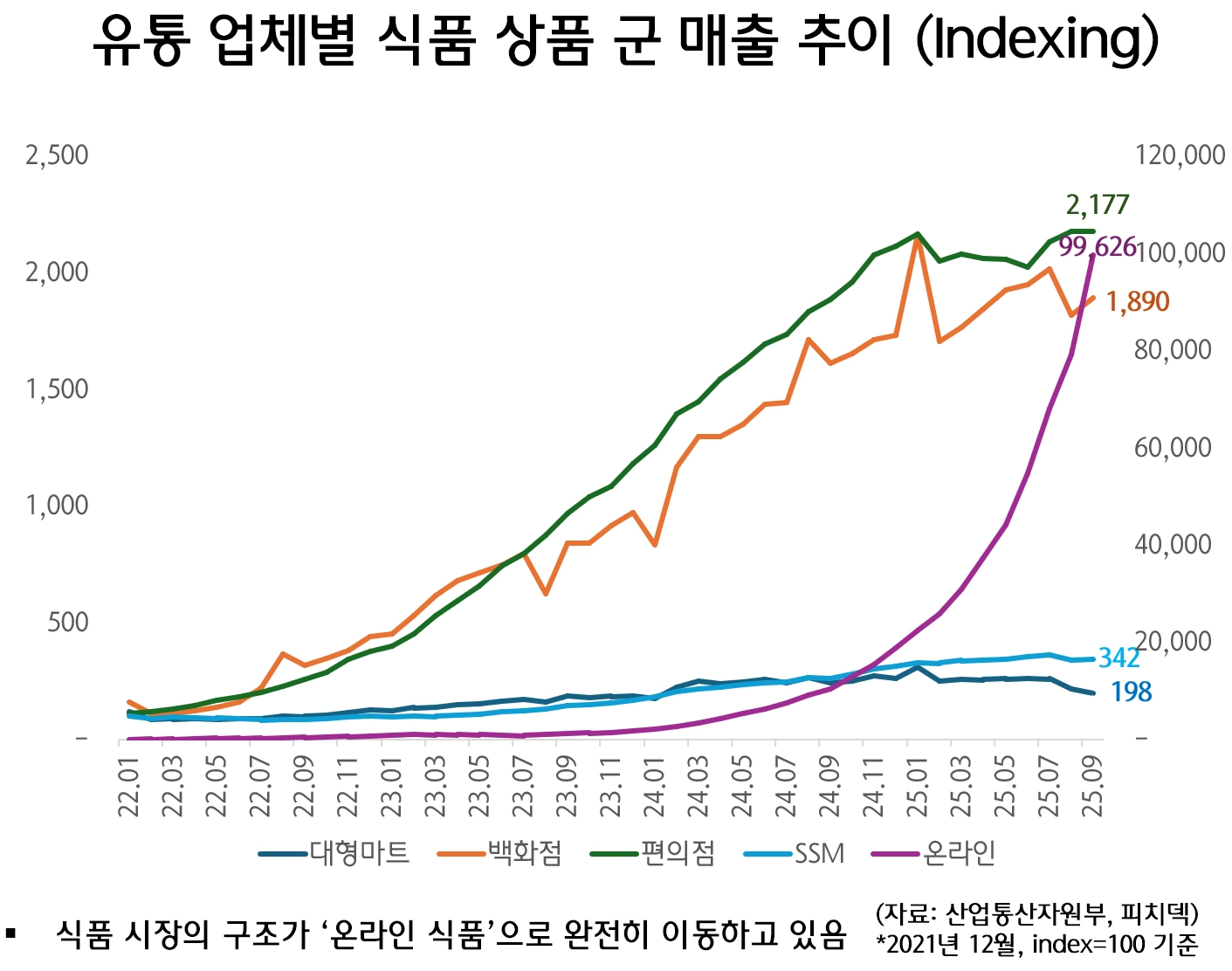
"Giving up margins on manufactured goods"... The collapsed summer boom
Bulky manufactured goods like detergent and toilet paper, and heavy product lines like beverages and liquor, which used to be cash cows for supermarket sales in the past, have now become the flagship products of online shopping. According to industry analysis, the sales proportion of ice cream, liquor, and detergent, which were traditionally high-sales categories for marts, has sharply decreased. In particular, for ice cream, it has become a structure where it is difficult to leave a margin due to cutthroat competition with 'ice cream discount stores' that have sprung up everywhere.
The voices from the field are even more desperate. When an ice cream discount store opens nearby, it is often operated directly by a franchise agency owner, meaning that unless general supermarkets respond by lowering prices to below cost, customers will stop coming. With even the demand for food ingredients leaning towards large food ingredient marts or hypermarkets, and small-volume purchases losing out to convenience stores, the standing of neighborhood supermarkets has narrowed.
Even supermarket owners buy wholesale from 'Coupang'
These changes have created a bizarre phenomenon in the procurement structure. With the exception of corporate supermarkets (SSM) equipped with large distribution networks, independent mart owners are in a situation where they are buying goods from their competitor, 'Coupang,' to sell them.
In the past, running around to compare prices across various procurement routes, such as wholesale markets like Cheongnyangni, E-mart's E-Club, GS Biz Club, and CS Yutong, was the virtue of a competent manager. But now, using Coupang's business-exclusive mall, 'Coupang Biz,' or Rocket Delivery is often cheaper and faster than using wholesalers. According to our analysis, a significant number of supermarkets are already under the influence of the online giant, changing their displays to avoid Coupang's flagship products or using Coupang altogether as a procurement source.
Conditions for survival: "A 180-pyeong store must exceed 8 million won in daily sales"
Amid worsening profitability, the breakeven point for survival has become even higher. According to standard industry criteria, it is analyzed that for a medium-sized mart of about 180 pyeong (approx. 595㎡) to survive, it must achieve about 45,000 won per pyeong, meaning daily sales of more than 8 million won, to be able to cover rent and labor costs.
In the case of opening an SSM, the accepted theory is that a backing demand of at least 1,500 households must be secured for stable operation. Models specialized for small square footage have also emerged, such as Lotte Super's 'Market 999', but general small marts are struggling, pushed aside by the proximity and product assortment of convenience stores.
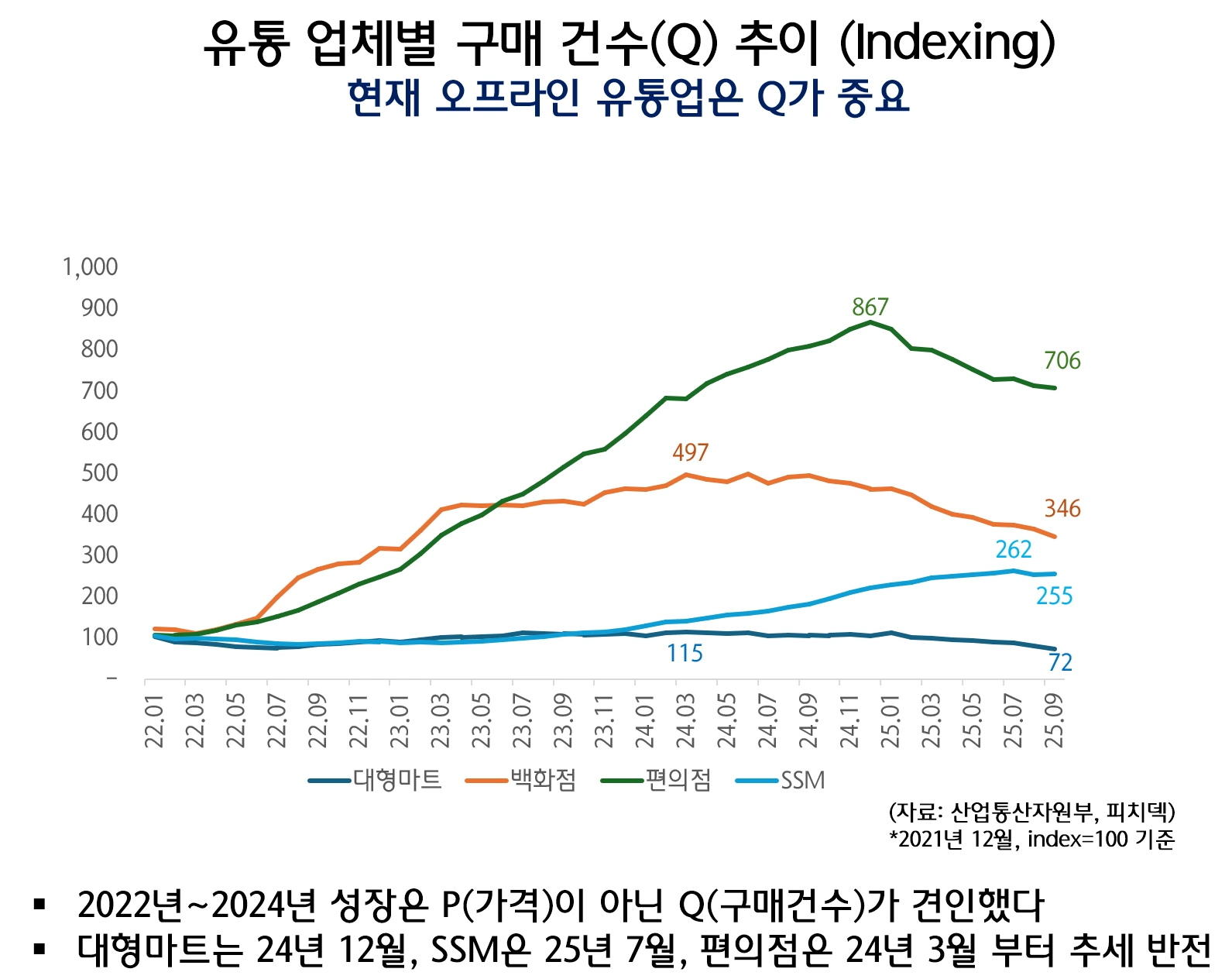
The final winning move is 'vegetables and fruits'
Ultimately, the only weapon supermarkets have to beat online and convenience stores is 'fresh food' that customers can see and choose with their own eyes.
According to data, the sales proportion of the vegetables (Vegetables) and fruits (Fruits) categories accounts for 30~45% of the total, and the expected average margin rate is also at the level of 15~25%, making them the core of store profits. Seafood has a high margin rate of 25~40%, but the entry barrier is high as inventory management and freshness maintenance are tricky.
Retail experts pointed out, "Since manufactured goods have lost price competitiveness, a supermarket's winning move ultimately depends on the quality and price management of fresh food," and "Stores that cannot gain a clear advantage in primary products (agricultural, marine, and livestock products) are bound to be weeded out."
The retail market in 2024 has become a battle where the number of purchases (Q) must be increased while price (P) increases are limited. In an era where Coupang has dominated manufactured goods, neighborhood marts are risking their lives on the freshness of the cabbage and apples that come in every morning.
Company financial data, investment reports, and startup analysis — all in one place
Explore PitchdeckCurated news, every week — straight to your inbox
Every Friday · Unsubscribe anytime