![[The Era of Bookstore Extinction ①] How the 'Meeting Plaza' Became a 'Graveyard': From the Glory of 'Jongno Bookstore' to the Bankruptcy of 'Books Libro'](https://d1gl51xbrxoj65.cloudfront.net/uploads/2026/01/19/1768798838653-12ixch.webp)
70-Year History of a Collapsed Knowledge Ecosystem Shocking 'Zero Bookstores' in 10 Local Governments Nationwide
Distribution Network Collapse Accelerates Due to Consecutive Bankruptcies of Wholesalers
"Meet me in front of Jongno Bookstore." In the 1980s, the meeting place for young people was always a bookstore. However, as of January 2026, those meeting places have been swept away by the massive wave of 'extinction,' making it hard to find even a trace. The bankruptcy of the mid-sized bookstore 'Books Libro' and the default of the wholesaler 'Bookplus' in September 2025 were signals that the Korean bookstore ecosystem had entered a stage of 'structural collapse' beyond a simple recession. How did offline bookstores, once the temples of knowledge and meeting plazas, go down the path of decline? Based on the obtained 'Era of Bookstore Extinction' report and the latest statistical data, this paper deeply analyzes the rise and fall of bookstores from their glorious days to today, when the domino of collapse has begun.
Phase 1: The Golden Age of Knowledge Monopoly... The 'Bookstore' Was Culture Itself (Liberation–Early 1990s)
From liberation until the early 1990s, bookstores wielded 'absolute power,' monopolizing the distribution of knowledge and culture. In an era when information was scarce, bookstores were the only window to encounter new ideas and cultural products. 'Jongno Bookstore' in Jongno, Seoul, was more than just a bookstore; it was a hideaway for intellectuals and students of the time, as well as a landmark of Seoul.
The opening of the Kyobo Book Centre Gwanghwamun branch in 1981 was a landmark event in Korean bookstore history. Emerging with the title of the world's largest single-floor area, Kyobo Book Centre elevated the bookstore from a 'place to buy books' to a 'place to enjoy culture.' Subsequently, the opening of the Youngpoong Bookstore Jonggak flagship store in 1992 heralded the dawn of the heyday of large bookstores.
During this period, the book supply chain stretched to every corner of the country. Large wholesalers like Songin Books, which started as 'Songin Seorim' in 1959, faithfully served as the 'backbone,' supplying books to thousands of neighborhood and university bookstores. It was thanks to the dense wholesale network they built that even small local bookstores could receive new releases from Seoul.
Phase 2: The Light and Shadow of Expansion and the Massive Reef of the IMF (Mid-1990s–Early 2000s)
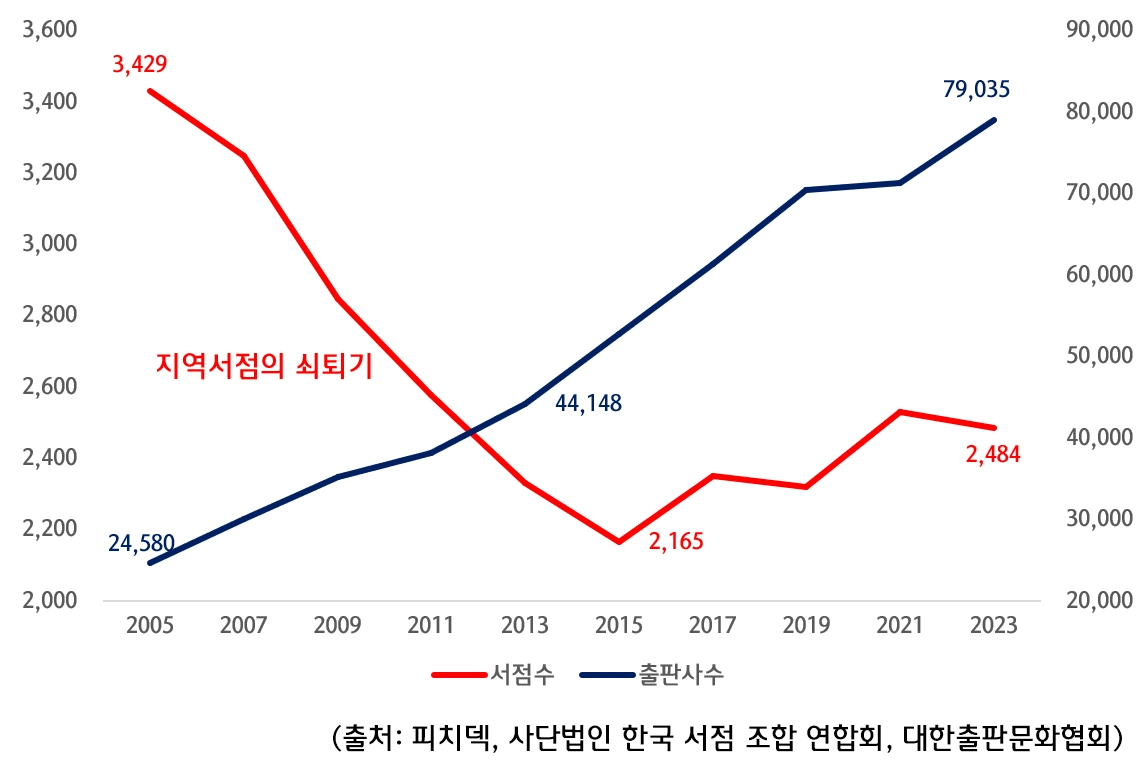
In the mid-1990s, the expansion of large chain bookstores backed by capital power shook up the market landscape. Bandi & Luni's, which started as Seoul Mungo in 1988, and Youngpoong Bookstore embarked on aggressive expansion by opening large-scale stores in key commercial districts like Gangnam. The pleasant spaces and diverse stationery and music products attracted consumers, but paradoxically, this resulted in stripping neighborhood bookstores of their place to stand.
The decisive blow was the 1997 IMF Asian financial crisis. As consumer sentiment froze due to the national economic crisis, book sales plummeted. Small-scale bookstores with weak financial power were the first to walk the path of closure, and the wholesale market was reorganized around a few large companies like Songin Books and Booxen. The problem was that during this process, the 'promissory note payment' method, which had been solidified as a practice for decades, was not improved and accumulated as a risk. This would later become the detonator for consecutive bankruptcies.
Phase 3: The Online Onslaught, a Desperate Transformation for Survival (Mid-2000s–Mid-2010s)
The emergence of online bookstores such as YES24 and Aladin in the 2000s choked offline bookstores. Pushed back by online bookstores featuring price discounts and same-day delivery, offline bookstores lost their price competitiveness. The bankruptcy of Jongno Bookstore in 2002 was a symbolic event marking the end of the 'offline bookstore era.'
Driven to the brink of survival, large bookstores began selling 'space' instead of 'books.' Kyobo Book Centre installing large reading tables in its stores and remodeling them into complex cultural spaces was a struggle for survival. 'Space marketing,' which increased customers' stay time by combining cafes and lecture halls, emerged as the only solution, but this was a strategy solely for large bookstores, while small-scale regional bookstores faced the crisis of withering away.
Phase 4: The Realization of 'Extinction'... Domino Bankruptcies and Severed Blood Vessels (Late 2010s–Present)
As the contradictions accumulated since the late 2010s burst out, the bookstore ecosystem entered a stage of collapse. In particular, the consecutive bankruptcies that occurred over the past five years are shocking.
Following the bankruptcies of the industry's second-largest wholesaler, Songin Books, and the large bookstore Bandi & Luni's in 2021, there was news of bankruptcies among major industry companies in 2025 as well. In March of last year, the publishing wholesaler 'Bookplus' went bankrupt, and subsequently in September, the mid-sized bookstore 'Books Libro,' whose largest shareholder was former President Chun Doo-hwan's eldest son, Chun Jae-kook, was also declared bankrupt by the Seoul Bankruptcy Court. Books Libro was a major client of Bookplus, starkly demonstrating the vicious cycle where a wholesaler's insolvency leads to a retail bookstore's bankruptcy.
According to the Korean Publishers Association's '2024 Publishing Market Statistics Report,' the adult reading population rate in 2023 was 48.5%, not even reaching half. As the decline in the reading population and the collapse of the distribution network intertwine, regional bookstores are disappearing without a trace.
As of 2024, there are 10 basic local governments nationwide without a single bookstore, including Ongjin-gun in Incheon; Muju, Sunchang, Jangsu, and Imsil-gun in Jeonbuk; Gunwi, Bonghwa, Ulleung, and Cheongsong-gun in Gyeongbuk; and Uiryeong-gun in Gyeongnam. There are also as many as 25 regions with only one bookstore. As the blood vessels of knowledge are blocked, 'cultural desertification' is rapidly spreading, centered around small provincial cities.
The situation in the United States is no different. According to statistics, U.S. bookstore sales peaked at about 17 billion dollars in 2007 and have continuously declined, plummeting to the level of 6.5 billion dollars in 2020. This is an indicator showing that offline bookstores are becoming an 'endangered species' worldwide.
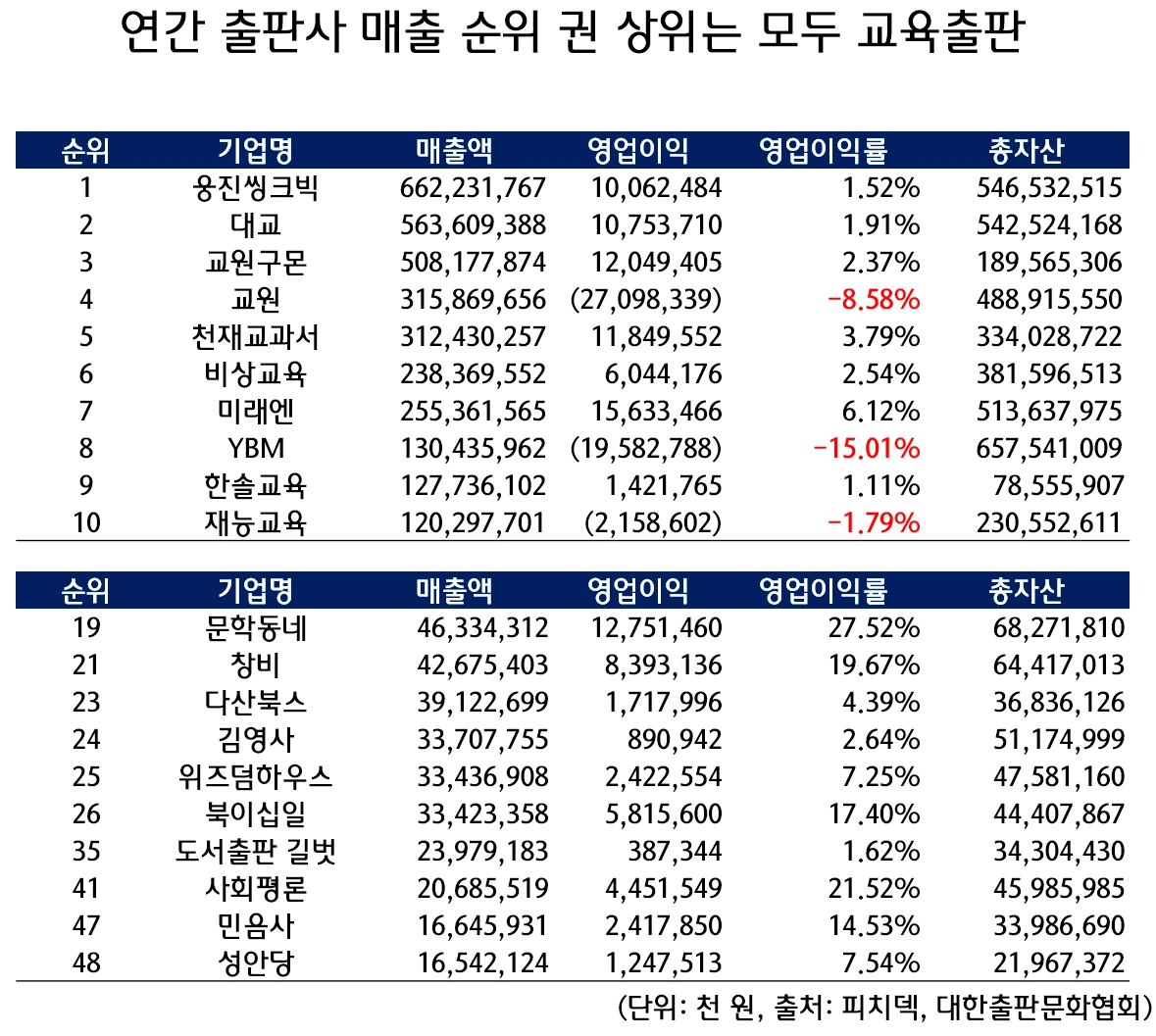
The extinction of bookstores is not just the closure of commercial facilities. The consecutive collapse of wholesalers and retail bookstores means that the fundamental distribution structure through which publishers make books and deliver them to readers has itself disintegrated. Now that the blood vessels that have carried knowledge for 70 years are severed, the Korean publishing ecosystem is standing before a golden hour for survival.
Company financial data, investment reports, and startup analysis — all in one place
Explore PitchdeckCurated news, every week — straight to your inbox
Every Friday · Unsubscribe anytime