Facing Liquidity Shortage Amid 7 Consecutive Years of Deficit
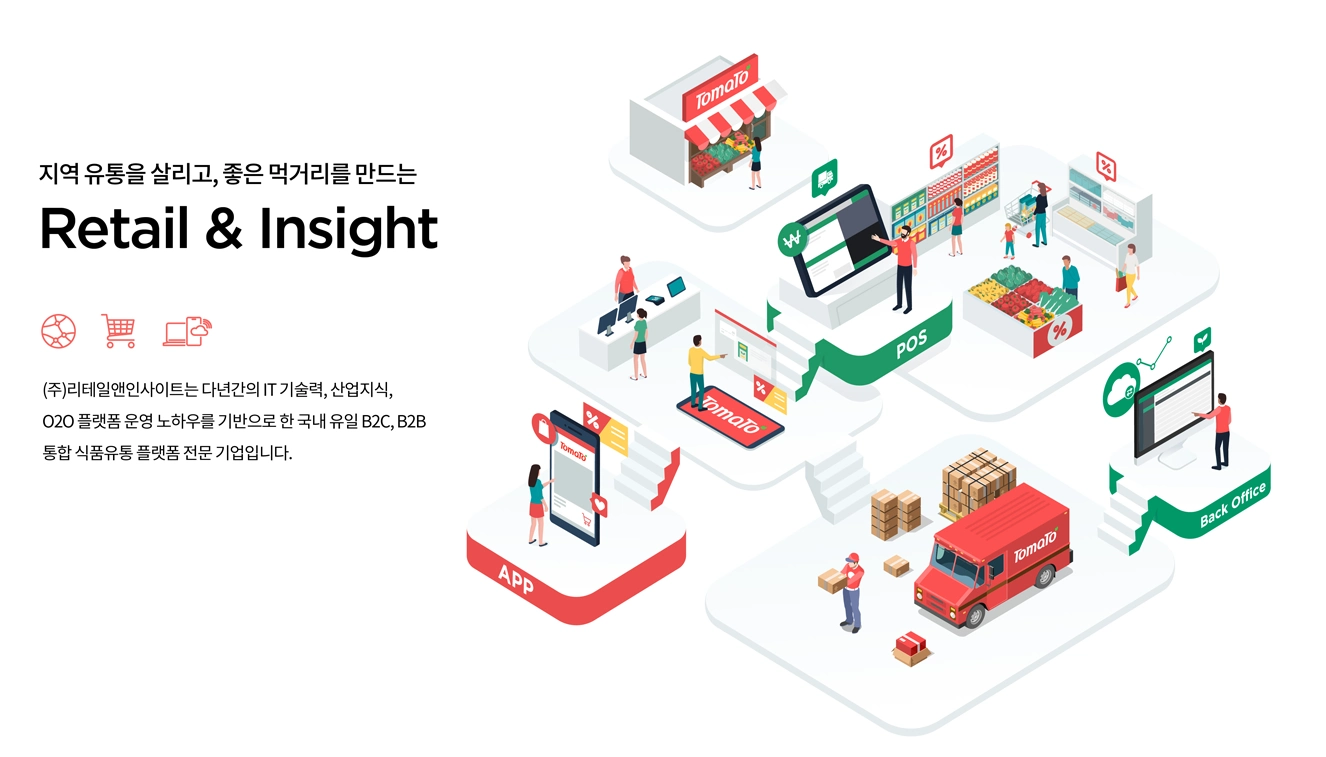
Retail & Insight is a startup specializing in integrated B2C and B2B supermarket platforms, established in 2019 and the only one of its kind in Korea. Targeting local neighborhood marts, it provides the 'Tomato' solution, which integrates cloud-based enterprise resource planning (ERP), supply chain management (SCM), order and payment apps, and POS, leading the digital transformation and e-commerce adoption of small and medium-sized marts. Although it has grown while garnering attention for its innovative business model, an examination of its confirmed financial status and performance suggests that it is currently facing management difficulties.
Rollercoaster Performance, "Liquidity Warning Light" Flashes Amid 7 Years of Deficit
Retail & Insight's 2025 performance recorded 4.5 billion won in sales, 1 billion won in operating loss, and 2.3 billion won in net loss.
Looking at the sales and profit and loss flow from 2019 to 2025, performance volatility and chronic profitability deterioration are clearly evident. Sales started at about 600 million won in 2019 and grew significantly, peaking at about 30.5 billion won in 2022. However, sales declined to 17.4 billion won in 2023, then plummeted to 3.3 billion won in 2024. They rebounded slightly to 4.5 billion won in 2025, but fall significantly short of their peak levels.
A more concerning aspect is that the company has not been able to escape operating deficits even once for 7 consecutive years since its founding in 2019. In 2022 and 2023, annual operating losses well exceeded 10 billion won, and even in 2024 and 2025 when sales decreased, it recorded deficits of about 5 billion won and 1 billion won, respectively. Despite having received a massive cumulative investment of over 35 billion won so far, the continuous 7-year deficit has placed the company in a severe state of capital impairment.
Moreover, the immediate liquidity shortage problem is a task that must be addressed. As of the end of 2025, Retail & Insight's current liabilities were 9.1 billion won, of which short-term borrowings facing immediate repayment pressure amounted to 8.1 billion won. On the other hand, available current assets were only 1.6 billion won, with cash at just 130 million won and short-term financial instruments at the 110 million won level, indicating an urgent need for liquidity management.
[Source: Retail & Insight Homepage]
Corporate Value Halved and Pre-IPO Targeting Partners
This financial deterioration also affected corporate value. Starting to attract investment at an estimated corporate value of about 50 billion won in 2019, the company raised its valuation to the low 200 billion won range in 2024, but earlier this year (2026), it is understood to have ultimately lowered its valuation by half to the low 100 billion won range to attract investment.
In particular, earlier this year, the company conducted Pre-IPO (pre-listing equity investment) fundraising, bringing in local marts and solution partners using its 'Tomato' platform as shareholders. Regarding this, Retail & Insight explained the justification for coexistence, stating, "Tomato's growth was built not by capital, but through the execution and trust of customers and the field."
However, from a financial perspective, a somewhat different interpretation emerges. As sales sharply decreased from 17.4 billion won to 4.5 billion won and complete capital impairment caused by accumulated deficits continued, it is analyzed that there would have been considerable difficulties in securing additional financial investors (FIs) in the market.
At a time when there is an immediate burden of over 8 billion won in short-term borrowings, if additional investment were not made, problems could have arisen in the overall operation of the company. As a breakthrough for this, it appears the company raised funds by engaging local marts and solution partners friendly to its platform as shareholders.
As a result, it is estimated that platform partners have joined at a valuation in the low 100 billion won range, which is significantly lower than its peak. Considering the 7 consecutive years of deficit structure, capital impairment, and liquidity shortage that it has still not escaped despite having received over 35 billion won in cumulative investments, careful judgment by new and existing investors seems necessary.
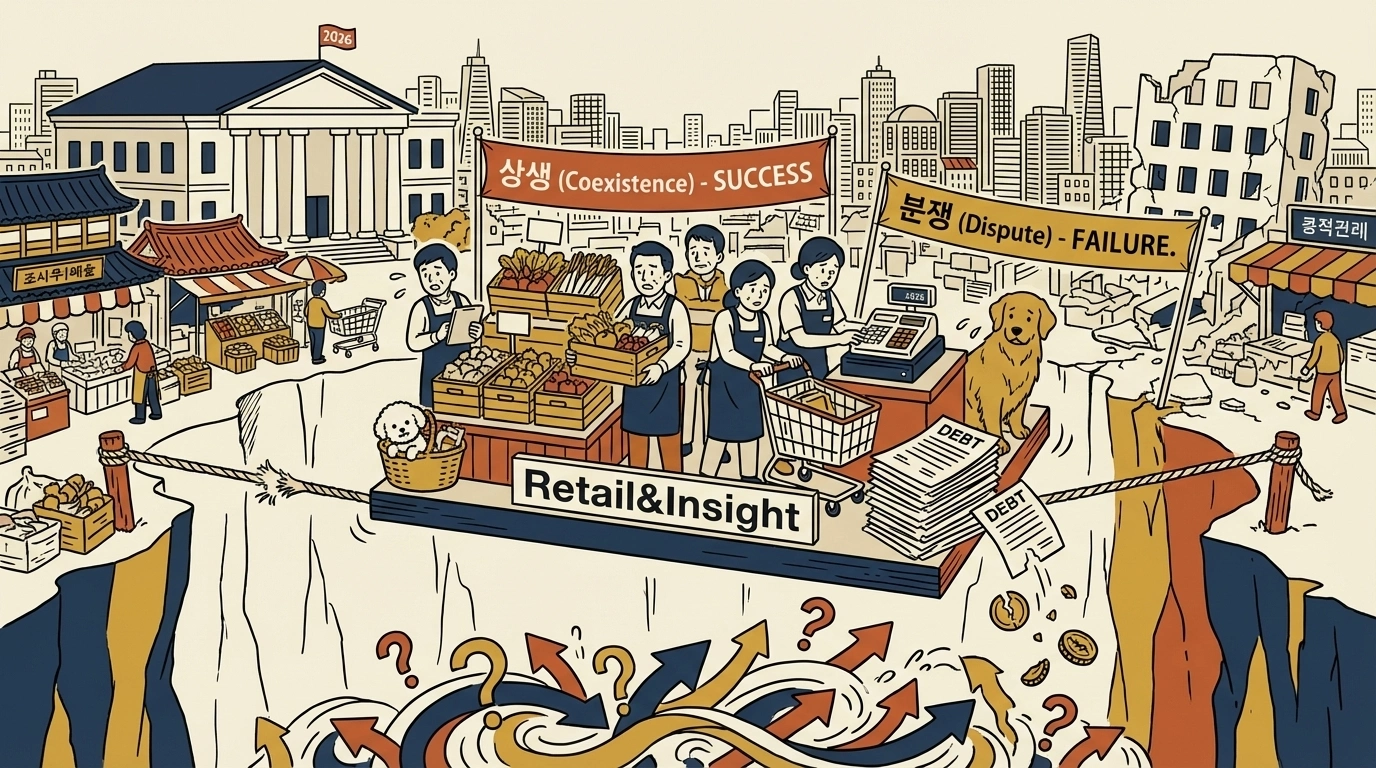
If performance rebounds and stabilizes successfully as the company hopes, it will be praised as a true 'coexistence model' where small business owners and the platform share profits. However, if it were to fail by any chance, it could result in financial damage to the small business shareholders subordinated to the platform, becoming a subject of responsibility battles and disputes.
Above all, considering the current financial status where securing immediate liquidity, such as repaying the 8 billion won range short-term borrowings, is urgent, questions also remain as to whether it was truly appropriate to raise funds from small business owners by deliberately pushing the grandiose term 'Pre-IPO', even though an IPO (Initial Public Offering) is realistically a very distant prospect.
Company financial data, investment reports, and startup analysis — all in one place
Explore PitchdeckCurated news, every week — straight to your inbox
Every Friday · Unsubscribe anytime