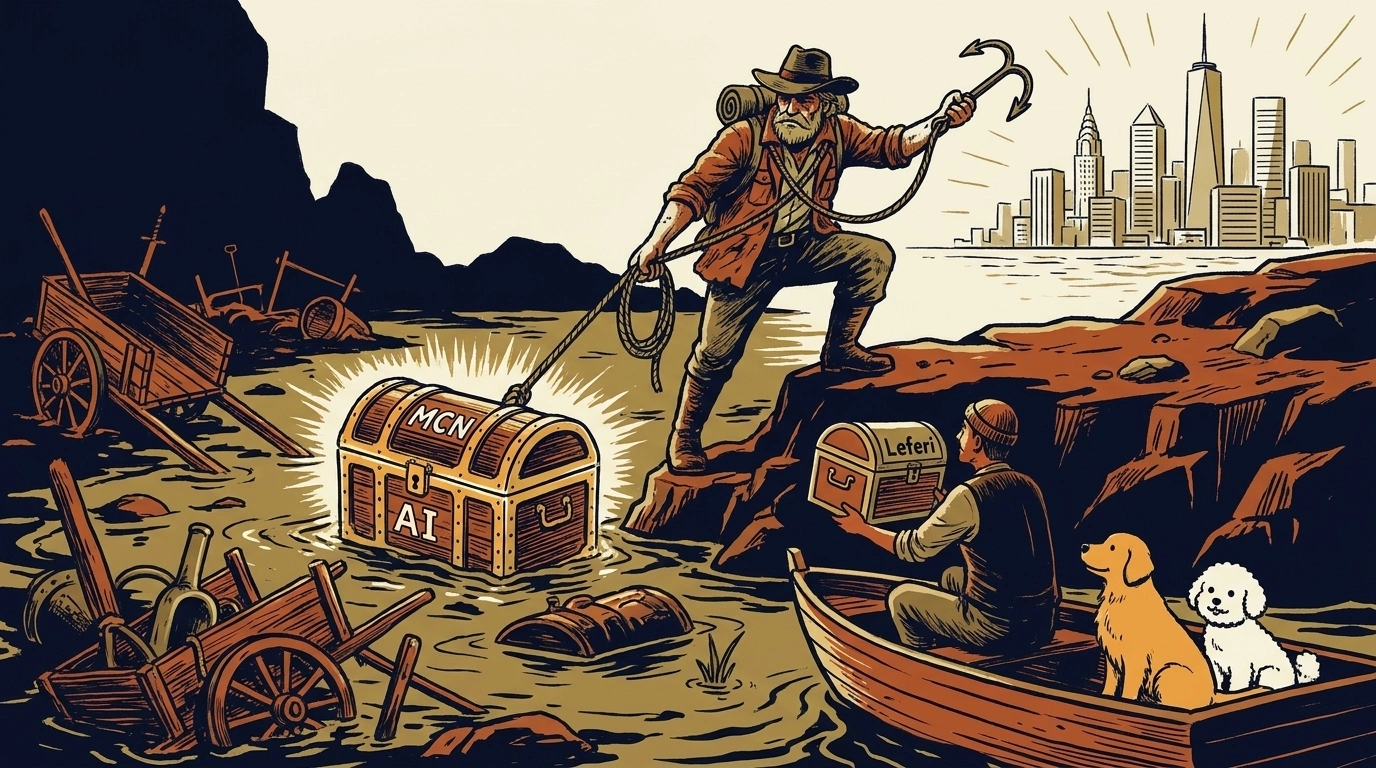
Treasure Hunter, a leading first-generation multi-channel network (MCN) in South Korea, is accelerating its 'turnaround' to escape the long swamp of deficits through intensive structural improvements.
Founded in 2015, Treasure Hunter, which has grown by focusing on creator management and digital content production and distribution, has suffered painful fluctuations in recent years due to worsening industry conditions and sluggish profitability. However, after achieving top-line growth and a meaningful reduction in operating losses recently, it achieved the primary outcome of improving its financial structure by injecting large-scale funds through the massive sale of its stake in its lucrative subsidiary, beauty MCN 'Leferi'. Furthermore, the market's attention is focused on the company as it recently recruited an AI (Artificial Intelligence) expert to seek new growth engines.
Rising from painful negative growth in 2025... Simultaneous improvement in top-line growth and profitability
Looking at Treasure Hunter's recent performance trends, the company suffered the double whammy of severe negative growth and expanded deficits during the transition from 2023 to 2024. On a consolidated basis, operating revenue (sales) fell sharply from about 28.18 billion won in 2023 to about 17.53 billion won in 2024, and standalone revenue also slumped from 27.49 billion won to 17.27 billion won. During the same period, the operating loss widened from 4.34 billion won to 4.59 billion won on a consolidated basis, and from 3.55 billion won to 4.64 billion won on a standalone basis, heightening a sense of crisis.
However, signs of a turnaround became clear as it entered 2025. In 2025, standalone revenue successfully rebounded by about 36.8% year-on-year to 23.64 billion won, and the operating loss was significantly reduced to 1.66 billion won. This demonstrates the potential for a structural turnaround, with profitability improving alongside top-line growth.
The primary contributor to this leap is the 'branded content revenue' sector. While the existing core business, 'platform revenue', firmly supported the downside at around 13.55 billion won in both 2024 and 2025, branded content revenue surged by more than 2.7 times from about 3.21 billion won in 2024 to about 8.86 billion won in 2025, driving overall growth.
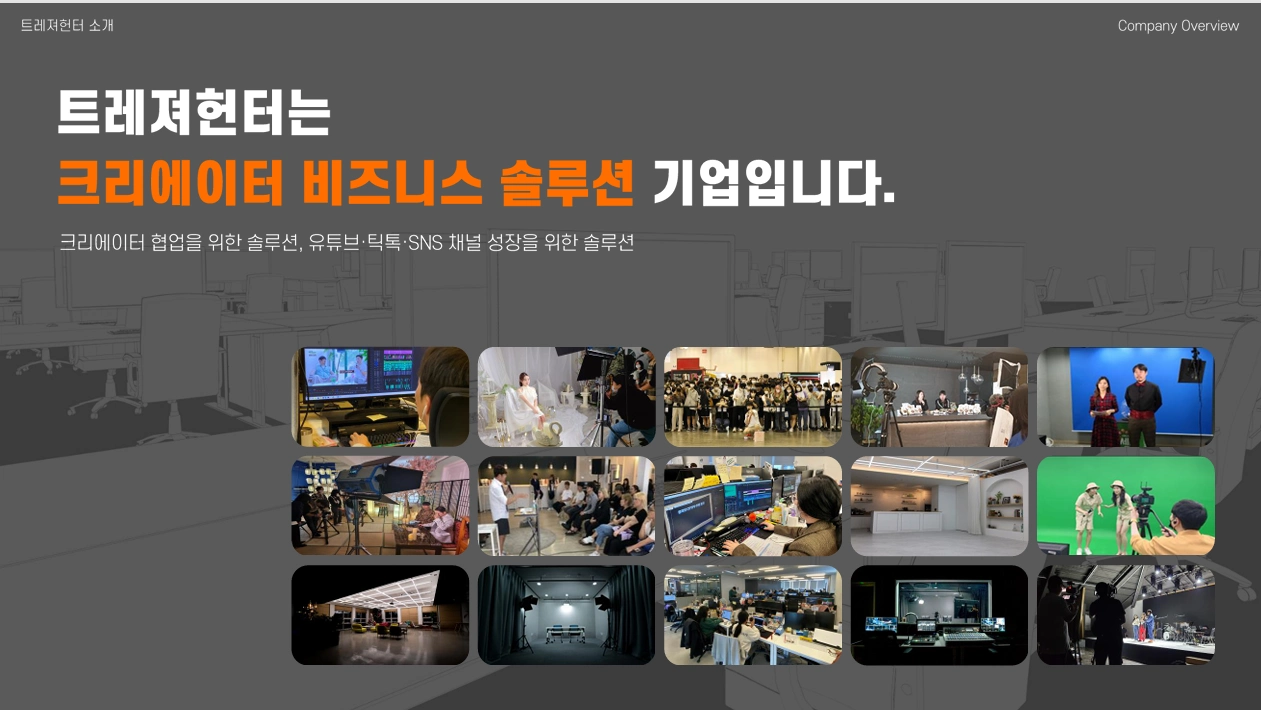
[Source: Treasure Hunter Company Introduction Material]
'Much-needed relief' from the sale of Leferi... Deficit rollercoaster and asset soundness risk
Behind the performance rebound lies a bone-crushing restructuring of the financial structure. Treasure Hunter sold a significant portion of its stake in its core subsidiary, 'Leferi Co., Ltd.', to private equity fund (PEF) operator H Private Equity (HPE) and others in 2024. According to the 2024 consolidated audit report, the company disposed of 22.39% out of the 32.39% stake it held, and as a result, it lost significant influence over Leferi, and the remaining stake (10%) was reclassified as 'financial assets measured at fair value through profit or loss'.
This stake sale brought a dramatic change to the financial statements. As of the end of 2023, prior to the sale of Leferi, Treasure Hunter's undisposed accumulated deficit reached a whopping 44.90 billion won. However, it recorded a net income of 19.43 billion won as a one-off other income of about 24.41 billion won was generated from the disposal of Leferi in 2024, thereby reducing the deficit by nearly half to 25.47 billion won by the end of 2024.
However, in 2025, an operating deficit of 1.66 billion won and financial expenses (such as valuation loss on convertible preferred stocks) overlapped again, resulting in a total net loss of 4.56 billion won, and the cumulative undisposed accumulated deficit as of the end of 2025 has swelled back to about 30 billion won (30,033,839,143 won).
The asset soundness issue also remains a ticking time bomb. As of the end of 2025, nearly half of the total book value of trade and other receivables of about 7.44 billion won, approximately 3.69 billion won, is set aside as an allowance for bad debts. In particular, it is experiencing serious difficulties in recovering long-term outstanding accounts, as 3.63 billion won out of about 4.13 billion won in long-term receivables exceeding 12 months were found to have been impaired. In addition, impairment losses are frequently recognized for investments in shares of subsidiaries and associates, including the subsidiary Media Truck Co., Ltd., making thorough management of non-performing assets urgent.
Additionally, unexpected contingent liability risks are lurking. Currently, a lawsuit filed by Double K Partners Co., Ltd. against Treasure Hunter and its CEO claiming about 500 million won in stock purchase prices is underway. In a situation where fund management is desperately needed for a turnaround, there is a possibility that it may act as an additional burden on the company's future financial condition or cash flows depending on the outcome of the pleadings in the lawsuit.
Holding a liquidity buffer in the 10 billion won range, but... Recovering 'cash-generating capability of core business' and 'AX transformation' are the keys to survival
Currently, Treasure Hunter's financial strength is secured enough to withstand immediate crises. Based on the standalone financial statements at the end of 2025, the company holds a liquidity buffer of about 10.12 billion won, combining about 4.82 billion won in cash and cash equivalents and 5.30 billion won in short-term financial instruments. This is more than enough to fully repay the 4.80 billion won in short-term borrowings recorded as current liabilities at the same time.
However, the fundamental risk that must be most closely observed is the 'cash-generating capability from operating activities'. The company's cash flow from operating activities remains in a state of continuous cash outflow (negative), with -2.77 billion won in 2024 and -2.26 billion won in 2025. In other words, the current liquidity can be seen as holding out by gradually exhausting the massive one-off cash of 17.90 billion won that flowed in from the disposal of the Leferi stake in 2024, rather than money earned from its core business.
Treasure Hunter is also seeking a breakthrough with new businesses to overcome these structural limitations. A representative example is the recent blitz recruitment of AI (Artificial Intelligence) expert Kim Hee-jin as the head of the AX (AI Transformation) Lab, declaring the incorporation of AI technology within the creator industry.
Ultimately, in order for Treasure Hunter to regain its past glory as a first-generation MCN and prove sustainable growth, it must successfully settle its business innovation (AX) based on new AI technology and turn the cash flow of its core business into a definitive surplus. The industry's attention is focused on whether the company can prove the time earned from the one-off asset sale with a structural turnaround in its core business.
Company financial data, investment reports, and startup analysis — all in one place
Explore PitchdeckCurated news, every week — straight to your inbox
Every Friday · Unsubscribe anytime