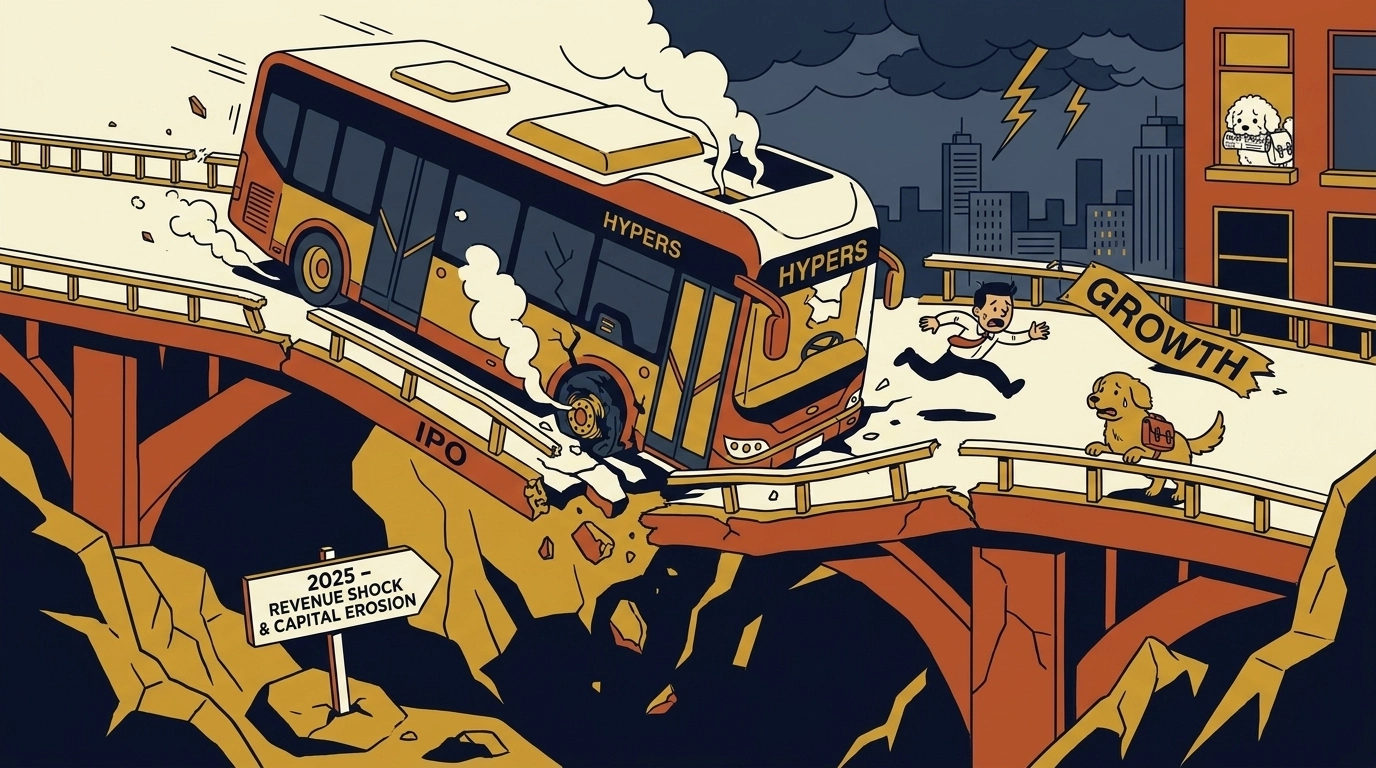
Electric bus manufacturer Pline Motors, which had ambitiously pursued an initial public offering (IPO), stands at a crossroads for its survival as it faces its greatest financial crisis and various judicial and administrative risks following the withdrawal of its listing. Sales, which had been rapidly accelerating, plummeted vertically starting in 2025, and with massive consecutive setbacks such as complete capital impairment and a disclaimer of opinion from the external auditor, the company is in a desperate situation with no easy breakthrough in sight.
What Kind of Company is Pline Motors? Past Leap from Nuclear Power Technology to 2nd Place in Commercial Vehicles
Pline Motors originally started as a company established in 2003 to develop and supply measurement control products and power supplies to nuclear power plants and the defense industry. In particular, it was recognized for its technological prowess, securing the 'Q-Class,' the highest safety grade in the nuclear power industry. Based on this reliability, the company began developing electric vehicle chargers in 2016 and entered the electric commercial vehicle market in earnest by launching the electric bus brand 'HYPERS' in 2017.
Since then, it quickly dominated the market by taking advantage of the absence of its competitor, Edison Motors, climbing to second place in domestic electric bus market share behind Hyundai Motor Company, and transforming into a company where electric buses account for 90% of total sales.
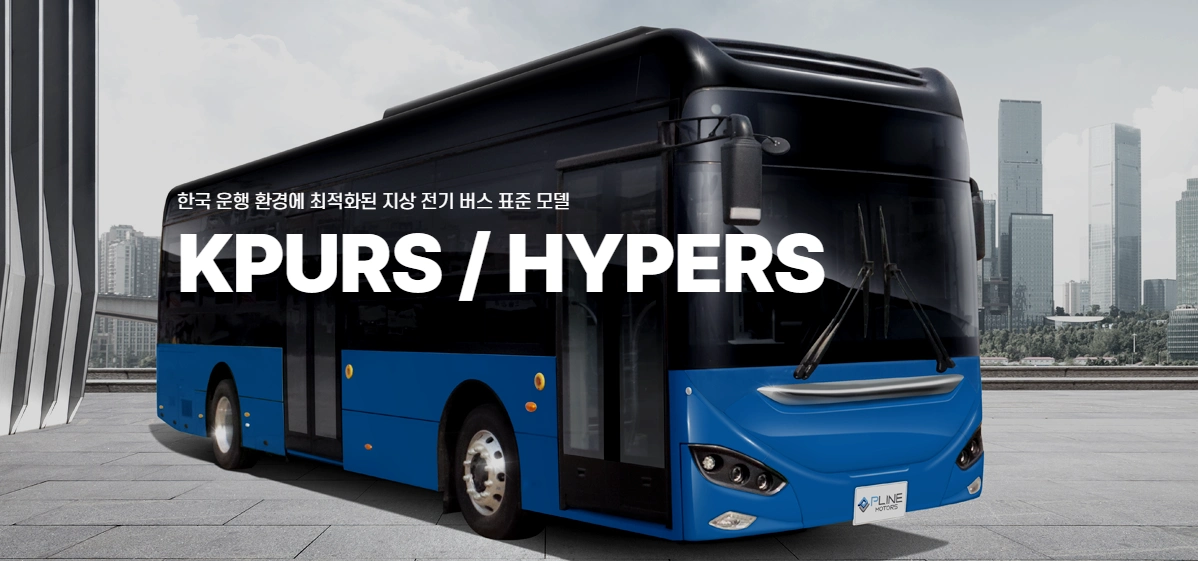
[Source: Pline Motors Website]
Explosive Growth and the Dream of an IPO... FIs' Bold Move for Large-Scale Conversion to Common Stock
Boosted by the expansion of electric vehicle distribution, Pline Motors' performance showed a steep upward curve every year. Sales, which were KRW 21.8 billion on a separate basis in 2020, jumped to KRW 36.5 billion in 2021 and KRW 85.3 billion in 2022, while consolidated sales, which began to be prepared by incorporating subsidiaries, also achieved explosive external expansion, recording KRW 115.2 billion in 2022 and KRW 171.9 billion in 2023.
Based on this, the company sought to enter the KOSDAQ market by filing for a preliminary listing review at the end of 2024. In particular, to lower the debt ratio (2,776% as of 2023), which was a stumbling block to listing, major financial investors (FIs) such as the Smart Mobility 2024 New Technology Business Investment Fund took the bold move of converting most of their approximately KRW 64 billion in redeemable convertible preference shares (RCPS) and convertible bonds (CB) into common stock at the end of 2024.
Earnings Shock in 2025... Sales Plummet Vertically from the KRW 200 Billion Range to KRW 40 Billion Range
However, the rosy future was shattered to pieces in 2025. In a situation with a high reliance on imported parts, profitability sharply deteriorated as the increased cost burden caused by the weak won (high exchange rate) combined with an explosion in interest expenses. Ultimately, the company had to voluntarily withdraw its preliminary listing review in April 2025.
Looking at the flow of sales and profit and loss clearly reveals the company's rapid collapse. On a consolidated basis, following sales of KRW 36.5 billion (operating profit of KRW 1.8 billion) in 2021, sales of KRW 115.2 billion (operating profit of KRW 8.9 billion) in 2022, and sales of KRW 171.9 billion (operating profit of KRW 11.6 billion) in 2023, the company reached its peak in 2024 by achieving sales of KRW 217.1 billion and an operating profit of KRW 9.5 billion. However, entering 2025, sales fell to KRW 43.2 billion, decreasing to one-fifth of the previous year's level, and operating losses amounted to a staggering KRW 63.9 billion.
The situation is equally poor on a separate basis. Sales soared from KRW 21.8 billion (operating profit of KRW 1.7 billion) in 2020 to KRW 196.7 billion (operating profit of KRW 10.8 billion) in 2024, but sales in 2025 plummeted to KRW 22.1 billion and recorded an operating loss of KRW 60.8 billion.
The Quagmire of an Audit 'Disclaimer of Opinion' and Complete Capital Impairment
On top of this earnings shock, the issue of a 'disclaimer of opinion' by the external auditor emerged. Taesung Accounting Corporation, which audited Pline Motors' 2025 financial statements, issued a disclaimer of opinion on both the consolidated and separate financial statements.
The auditor cited 'extreme uncertainty regarding the going concern assumption' as the core reason. As of the end of 2025, the company's current liabilities exceeded its current assets by KRW 68,668 million on a consolidated basis and KRW 54,367 million on a separate basis, placing it in a severe state of liquidity crunch. In addition, it was found to be highly likely that a large-scale impairment charge would occur on the book value of assets, as the auditor failed to obtain sufficient evidence for an appropriate impairment assessment of cash-generating units (CGU).
Consequently, the company was burdened with an enormous accumulated deficit (approximately KRW 84.9 billion consolidated, and approximately KRW 78.3 billion separate) as of the end of 2025, and its total equity fell into a state of 'complete capital impairment,' recording KRW -17.7 billion on a consolidated basis and KRW -11.0 billion on a separate basis.
Concerns of Serial Insolvency Among Major Clients and the 'Direct Hit' of a Fair Trade Commission Rebate Investigation
Behind the collapse of the internal financial network lie signs of insolvency among major clients such as transportation companies. Within selling and administrative expenses on a 2025 consolidated basis, bad debt expenses alone were recognized at approximately KRW 11.8 billion (approximately KRW 10.4 billion on a separate basis), which allows for the inference of potential insolvency of client receivables. As Pline Motors' guarantees are intertwined with the installment financing for transportation companies' electric bus purchases, a close grasp of the risks is required.
To make matters worse, external legal and administrative risks are pouring in. The Fair Trade Commission (FTC) detected allegations that Pline Motors provided unfair rebates, such as cash and gift certificates, to transportation company executives, employees, and their families in exchange for electric bus deliveries, and dispatched an examiner's report containing sanctions opinions in late November 2025. If the FTC's sanctions, including fines, are finalized, the company will suffer a fatal blow.
In addition, multiple administrative lawsuits, including a 'confirmation of illegality of omission,' and constitutional complaints are underway against the Ministry of Environment and the Korea Environment Corporation, and tax appeal procedures are continuing after receiving an advance notice of taxation regarding value-added tax exemption requirements for certain eco-friendly vehicles. Furthermore, with the penalty risk of up to approximately KRW 7.8 billion (10%) that could arise if it falls short of the battery system purchase guarantee contract with Kumyang Co., Ltd., and inventory financing problems where numerous vehicles and receivables are tied up as collateral for transfer, all intertwined, dark clouds are casting a shadow over the company's future prospects for recovery.
Company financial data, investment reports, and startup analysis — all in one place
Explore PitchdeckCurated news, every week — straight to your inbox
Every Friday · Unsubscribe anytime