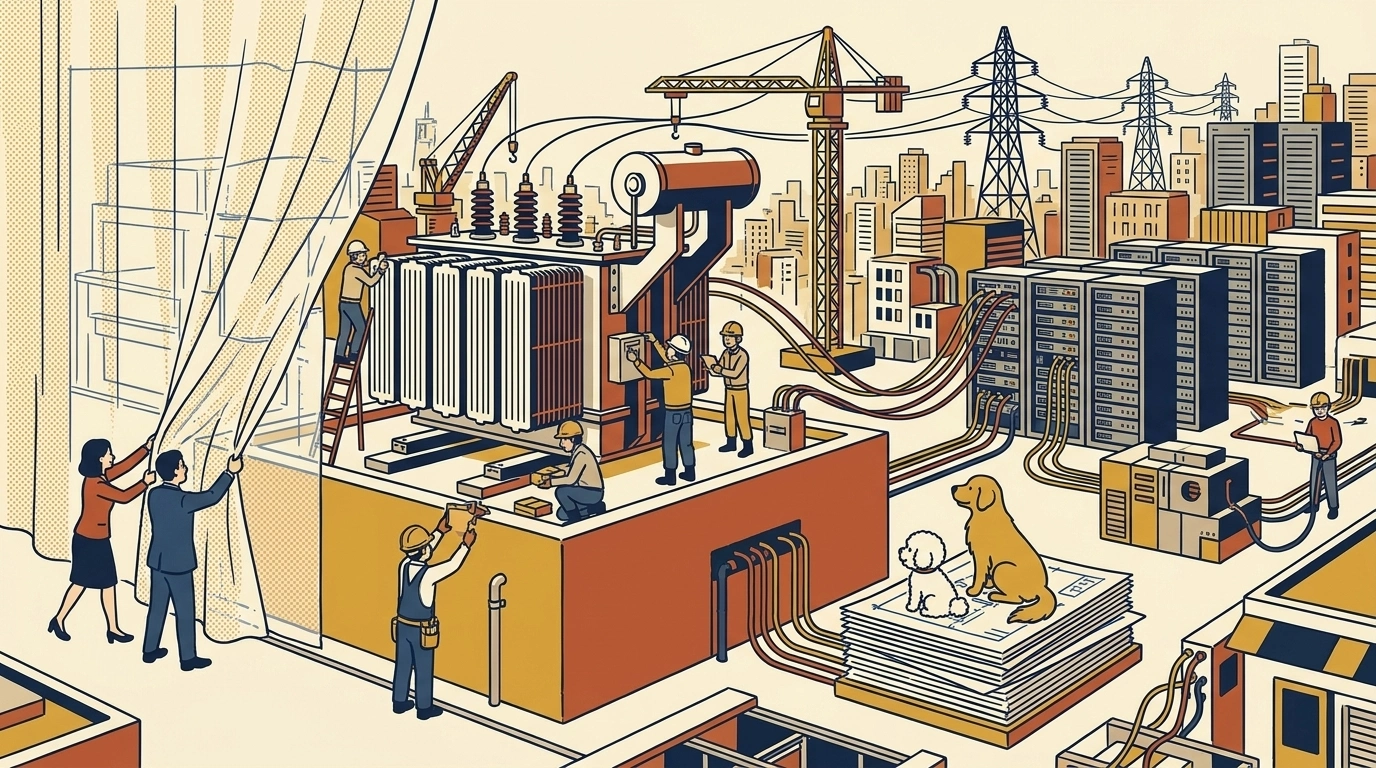
Established in 1946 as Korea's first manufacturer specializing in transformers, Kukje Electric is a core power equipment company that has grown alongside the development of South Korea's power industry based on its long-accumulated technological prowess. Recently, after global private equity fund (PEF) manager Anchor Equity Partners (hereinafter Anchor PE) acquired management rights, Kukje Electric has been showing remarkable growth through bold fundamental improvements and structural reorganization.
'Real Scorecard' Stripped of Merger Effects... Sales Surge by 54% and Operating Profit by 57%
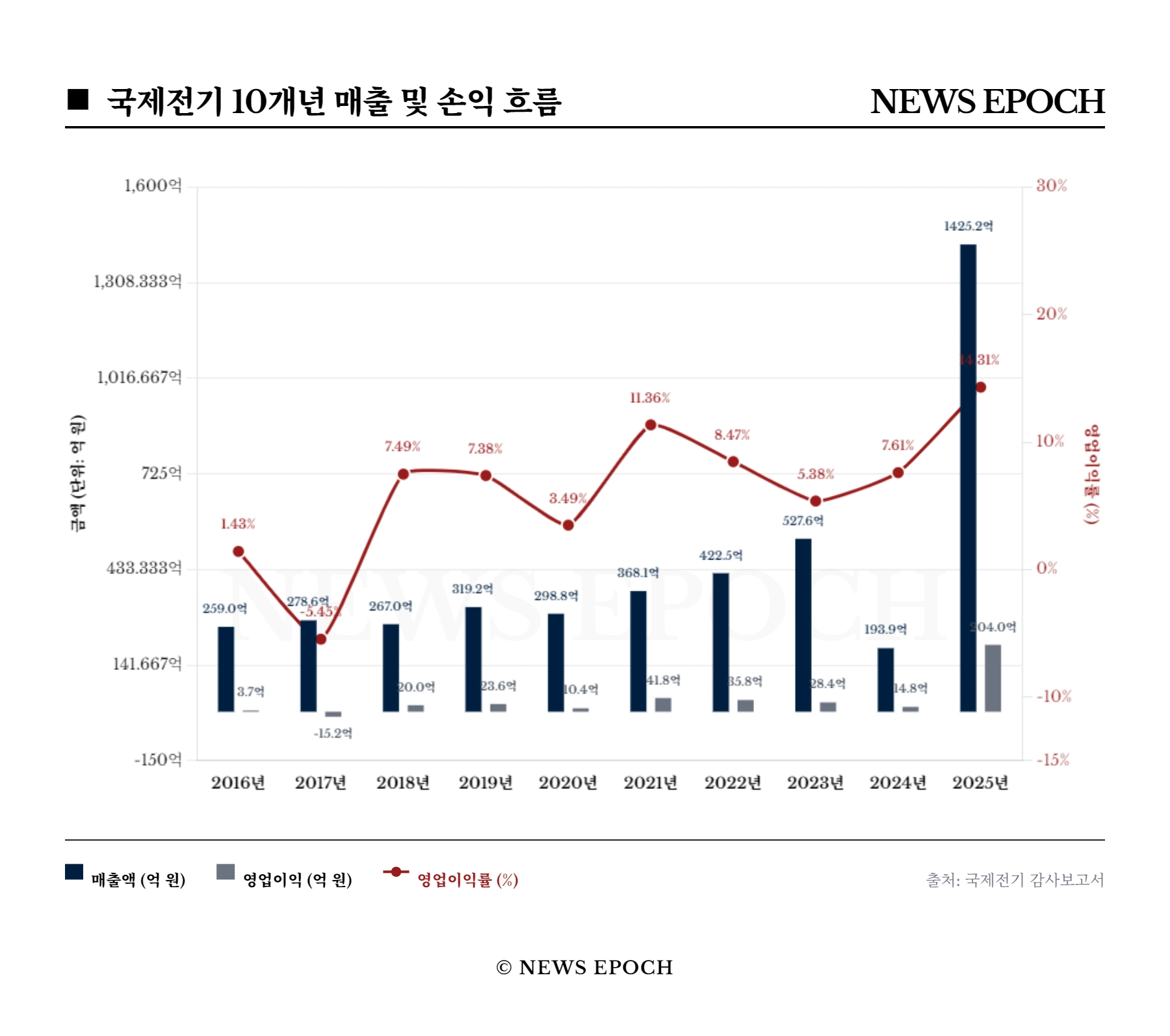
As of January 1, 2025, Kukje Electric absorbed and merged with its controlling company, Asea E&T Co., Ltd. Due to this event, which was treated as a reverse merger for accounting purposes, the year-over-year performance on the financial statements appears to have exploded several times over from 19.4 billion won to 142.5 billion won, but this is an accounting illusion resulting from the reverse merger accounting treatment. However, even if this illusion is completely removed and the original scales of the two companies are combined and compared, Kukje Electric's substantial, high-quality growth is clearly confirmed.
In 2024, prior to the merger, the original sales generated by each company were approximately 72.95 billion won for Kukje Electric and approximately 19.39 billion won for Asea E&T, making the simple combined sales around 92.34 billion won. In contrast, the sales earned during the single year of 2025 after the merger recorded approximately 142.52 billion won. Even assuming they had operated their businesses independently without merging, the overall sales volume combining both companies' business areas grew by approximately 54.3%.
The operating profit indicator, which shows the core business competitiveness of the company, is even more encouraging. The operating profits of the two companies before the merger in 2024 were 11.52 billion won for Kukje Electric and 1.48 billion won for Asea E&T, amounting to approximately 13.0 billion won when simply combined. In the 2025 performance, operating profit jumped to approximately 20.4 billion won. This represents a growth of about 56.9%, which exceeds the sales growth rate (54.3%). This aspect demonstrates that successful cost efficiency was achieved through economies of scale.
Net income, the final profit stage, also increased significantly. The real combined net income of the two companies in 2024, excluding the overlapping equity method gain (10.93 billion won), was approximately 12.41 billion won, but the net income after the merger in 2025 grew by about 43.8% to approximately 16.81 billion won. This suggests that the core business itself has definitely entered a turnaround and growth trajectory, as the bolt-on strategy executed following Anchor PE's acquisition coincided with favorable business conditions in power infrastructure such as data centers.
Surging Advances from Customers and Trade Receivables, "Proof of an Abundant Order Backlog"
Indicators that can gauge future performance are also positive. Advances from customers, which indicate vitality due to the characteristics of the order-based industry, increased significantly to 22.4 billion won as of the end of 2025. This is a noticeable increase compared to the simple combined advances from customers of the two companies as of 2024 (approximately 18.3 billion won). Since advances from customers are money received in advance from clients before manufacturing products, this means that a secure order backlog has been established that will be recognized intact as sales within the next 1 to 2 years.
However, due to sales expansion, trade receivables also noticeably increased from the simple combined amount in 2024 (approximately 18.8 billion won) to 30.7 billion won in 2025. While the company is managing its allowance for bad debts by keeping it low at around 290 million won, it will need to concurrently manage risks to ensure that the collection period does not lengthen in the future.
Remaining Contingent Risks and Anchor PE's Exit Blueprint of a '200 Billion Won Valuation'
There are also contingent risks facing the company. Currently, Kukje Electric is undergoing a Supreme Court trial after being sued by a company called '지에스티트항스포메터흐 (JST Transformateurs)' for the prohibition of unfair competition acts, among other claims. The litigation value is approximately 2.2 billion won, and the company has set aside 510 million won as a litigation provision liability in preparation for the possibility of losing. Depending on the final ruling of the Supreme Court, there is room for the recognition of additional losses or cash outflows.
Meanwhile, the stock options granted to executives and employees by Kukje Electric in 2025 are a clue to catch a glimpse of the PEF's future exit timeline. The company granted a total of 16,342 stock options to its executives and employees, with the exercise price set quite high at around 493,000 won per share. This condition, which allows the options to be exercised two years after the grant date, indirectly suggests Anchor PE's strong confidence and target to explosively grow the company's enterprise value (valuation) beyond this exercise price within the next 2 to 3 years. Currently, the enterprise value reverse-calculated based on this stock option issuance is estimated to be around 200 billion won.
Company financial data, investment reports, and startup analysis — all in one place
Explore PitchdeckCurated news, every week — straight to your inbox
Every Friday · Unsubscribe anytime