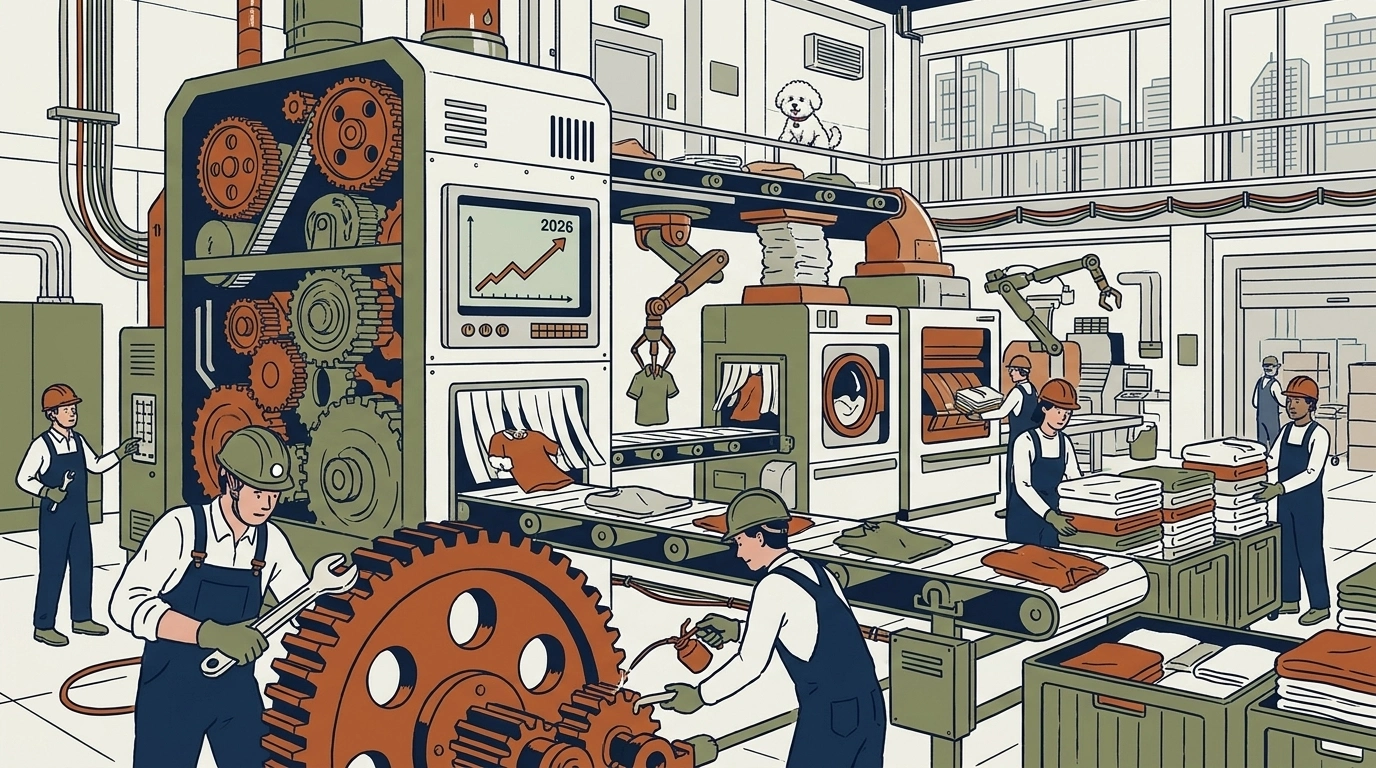
Leaping Forward as a 'Comprehensive Laundry Tech Company' Combining Logistics and AI
Operating the non-face-to-face laundry service 'Laundrygo', WashSwat is a representative 'Laundry Tech' company leading the digital transformation of the laundry industry by combining logistics and artificial intelligence (AI) technology beyond simple laundry collection and delivery. Since its establishment in January 2018, it has achieved rapid growth and solidified its position in the B2C laundry market, and recently, it is rapidly expanding its business scope to the nationwide B2B laundry market. Furthermore, it is actively exploring expansion into environmental, social, and governance (ESG) and circular economy models, such as operating the secondhand clothing platform 'Zarakdang'.
The Past 5 Years: A Period Focused on Top-line Growth
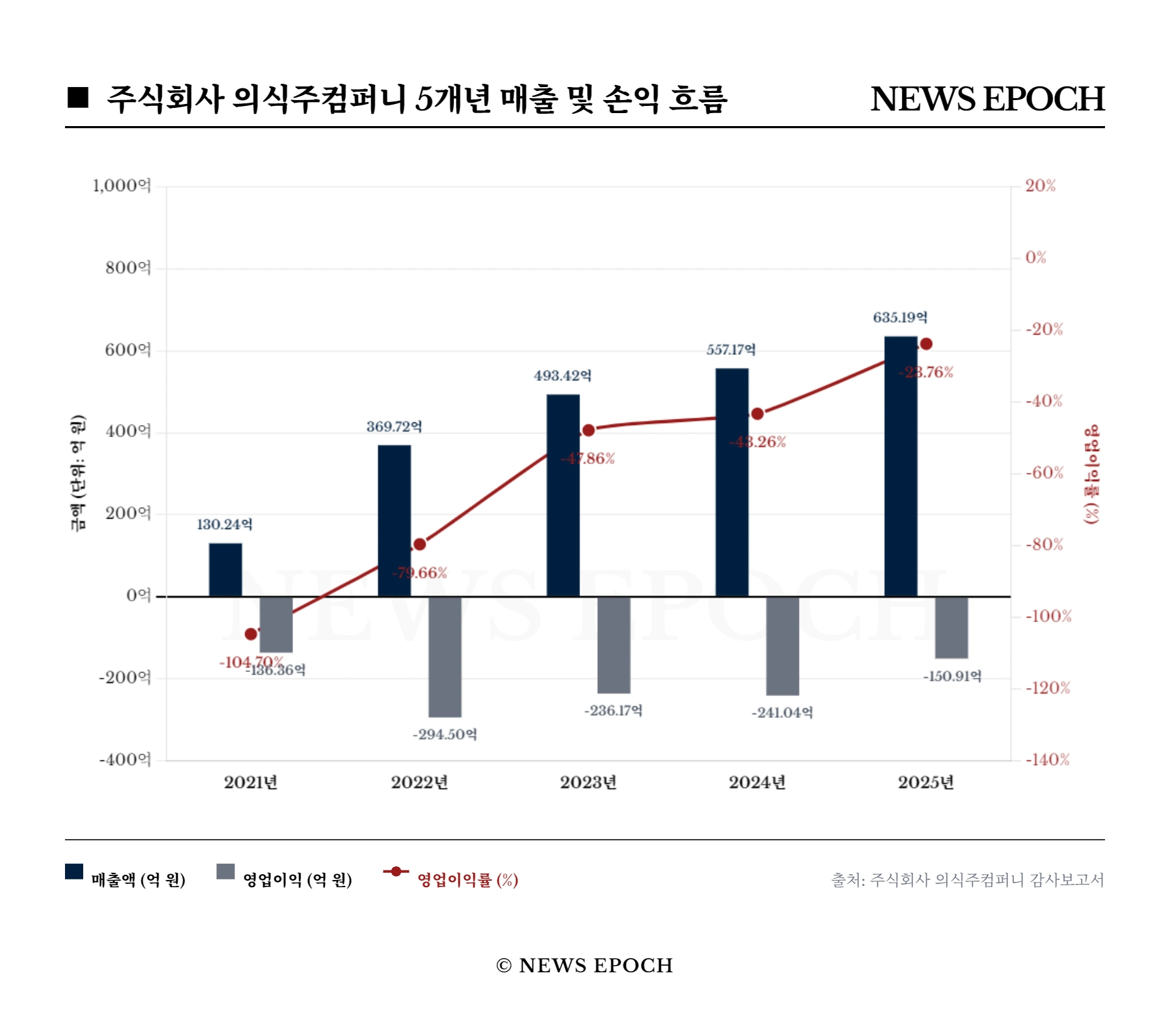
Based on aggressive business diversification and market preemption strategies, WashSwat achieved remarkable external expansion over the past 5 years. The company's sales revenue grew rapidly by about 5 times over 5 years, from approximately 13.02 billion KRW in 2021 to about 63.52 billion KRW in 2025. However, securing short-term profitability was a major challenge. In 2022, operating losses peaked at 29.45 billion KRW as large-scale facility investments and business expansion costs were reflected. Nevertheless, through intense cost efficiency and fundamental improvement thereafter, the company continuously reduced its loss margin, succeeding in significantly shrinking its operating loss to the level of 15.09 billion KRW in 2025. In this process, labor costs (salary and severance pay), transportation expenses, commission fees, and factory equipment depreciation expenses acted as major operating expenses.
Occurrence of Complete Capital Impairment at the End of 2025 and Aggravation of Financial Risks
Although the external size grew explosively, the long-term accumulated deficit placed financial pressure on the company. As the accumulated deficit reached 125.1 billion KRW, it fell into a state of complete capital impairment as of the end of 2025, recording total assets of 73.71 billion KRW, total liabilities of 82.89 billion KRW, and total equity of -9.17 billion KRW. The repayment burden on short-term and long-term borrowings also played a major role. As of the end of 2025, short-term borrowings were 19.23 billion KRW and current portion of long-term borrowings were 12.72 billion KRW, bringing the total amount of borrowings due for repayment within a year to about 31.95 billion KRW, thereby heightening liquidity risks. In addition, impairment risks related to subsidiary entities were a cause of worsening financial indicators. In October 2023, WashSwat acquired a 100% stake in the interior commerce platform (주)집꾸미기 (GGUMIGI Co., Ltd.), recognizing about 1.702 billion KRW of goodwill as an intangible asset. However, due to the subsidiary's poor performance, an annual goodwill impairment test was conducted, and it was evaluated that the recoverable amount of the cash-generating unit fell short of its book value. Accordingly, out of the recognized goodwill, approximately 1.503 billion KRW had to be treated as a one-time impairment loss under non-operating expenses in 2024.
Complete Resolution of Capital Impairment Through Asset Revaluation and Follow-on Investment Attraction from Altos
WashSwat embarked on multifaceted restructuring efforts to overcome this financial crisis. First, it changed the valuation method for its owned land starting in 2024. As the value of the land at the Gunpo factory (acquisition cost 7.367 billion KRW → revalued amount 9.166 billion KRW) and the Busan factory (acquisition cost 9.173 billion KRW → revalued amount 11.069 billion KRW) was adjusted upward, the total book value increased from 16.541 billion KRW to 20.235 billion KRW. The resulting revaluation surplus of approximately 3.694 billion KRW was reflected in the revaluation surplus, producing a positive effect of expanding total equity. The most decisive turnaround occurred in June 2026. The company completed attracting new investments totaling 7.5 billion KRW from Altos Ventures (Altos Korea Opportunity Fund 6, etc.). In conjunction with this, the 10 billion KRW worth of convertible bonds issued in September 2025 were converted into redeemable convertible preference shares (RCPS) according to the terms of the investment agreement. As the 10 billion KRW of CBs previously booked as liabilities were reclassified into equity, and 7.5 billion KRW in new funds were injected, the complete capital impairment was completely resolved, and the financial structure improved dramatically.
Full-scale Economies of Scale, a Watershed Toward Turnaround
Along with the improvement in the financial structure, a rebound in the profitability of its core business is also materializing. As of April 2026, WashSwat surpassed 7 billion KRW in monthly sales, succeeding in achieving a monthly operating profit surplus (BEP) for the first time since its founding. This is the 'economy of scale', the fruit of large-scale, preemptive investments in smart factories made in the past. Due to the construction and expansion of smart factories in Gunpo, Busan, etc., the company's tangible asset scale has grown to over 60 billion KRW, and the resulting depreciation expense amounts to approximately 4.3 billion KRW annually. Due to the structural characteristic of a high proportion of fixed costs (factory depreciation expense, rent, etc.), it puts strong pressure on profits and losses when the volume is low; however, in a phase like the current one where laundry volume is steadily increasing, a leverage effect occurs wherein unit economics and the operating profit margin improve steeply.
For WashSwat, 2026 appears to be a year that can serve as a watershed for a turnaround, marking both the escape from a severe financial risk known as the "resolution of the capital impairment structure" and a business performance rebound of "achieving a monthly operating profit BEP" at the same time. If the company succeeds in turning its annual operating profit to a surplus in the future and achieves a continuous positive shift in operating cash flow (OCF), it will enter a trajectory of stable qualitative growth, and its corporate value may also be newly reevaluated.
Company financial data, investment reports, and startup analysis — all in one place
Explore PitchdeckCurated news, every week — straight to your inbox
Every Friday · Unsubscribe anytime