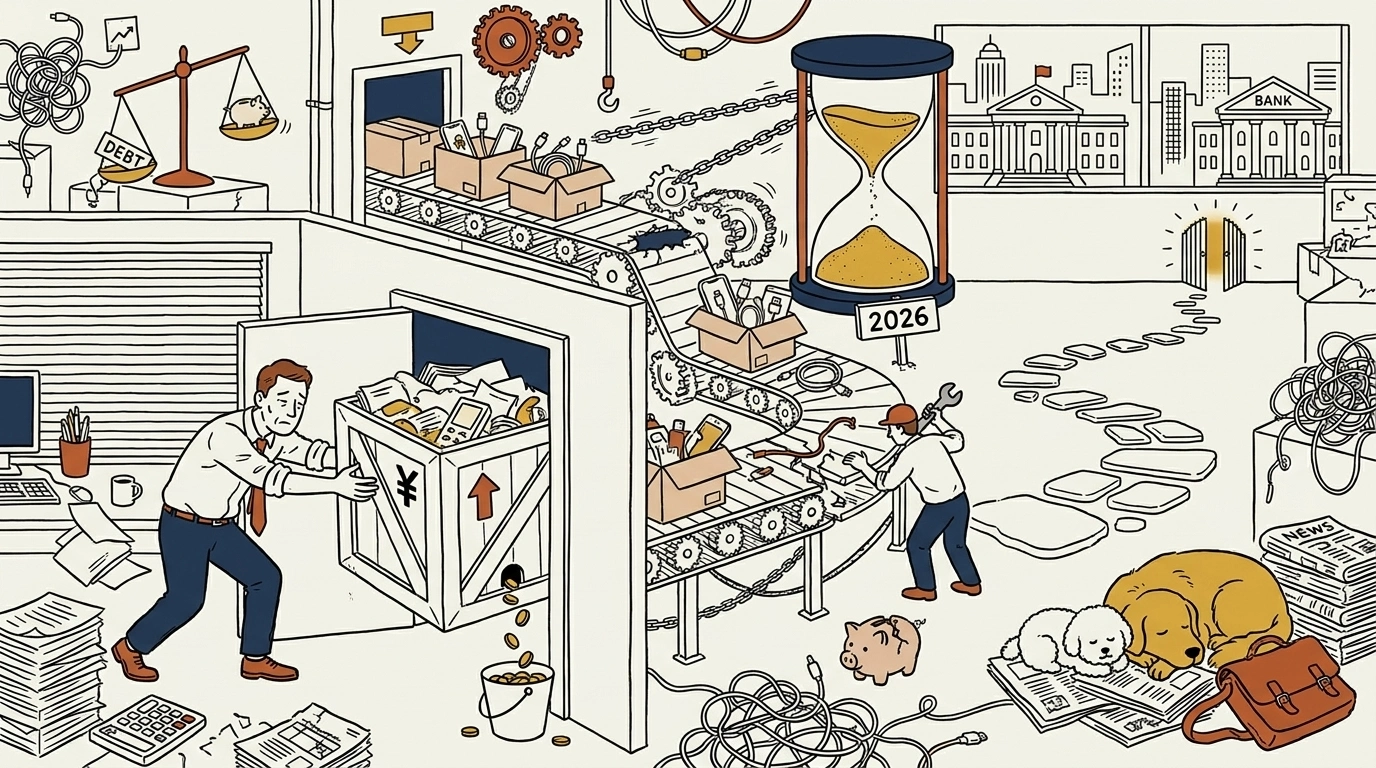
Core Attiz Co., Ltd., a small but strong technology company known for its mobile accessory brand 'ATTIZ,' failed to overcome liquidity constraints and ultimately entered the legal restructuring phase. According to the court, the Seoul Bankruptcy Court issued a comprehensive stay order against Core Attiz on July 15, 2026. Consequently, as compulsory execution by creditors is prohibited, the company has secured time to seek business normalization free from immediate repayment pressures.
5 Years of Alternating Surpluses and Deficits… Reverting to Deficit in 2025 Due to Interest Burden
Looking at Core Attiz's business performance report over the past five years, it is evident that earnings volatility was high depending on changes in the market environment. In 2021, the company posted 9.84 billion won in sales, recording 810 million won in operating profit and 640 million won in net profit. The following year, in 2022, sales decreased to 8.3 billion won, resulting in an operating loss of 1.38 billion won, but net profit was maintained at 640 million won. In 2023, sales dropped further to 6.83 billion won, but through cost control, it generated 430 million won in operating profit and 60 million won in net profit.
A notable period is 2024. At that time, the company significantly increased sales to 9.48 billion won, posting 700 million won in operating profit and 160 million won in net profit, demonstrating a clear earnings turnaround. However, this surplus trend did not last long. In 2025, sales fell by 17.2% year-on-year to just 7.85 billion won. While it barely avoided an operating deficit by generating 190 million won in operating profit, heavy interest expenses amounting to 548 million won, along with bad debt expenses (60 million won), held the company back, ultimately leading to a net loss of 268 million won and a return to deficit.
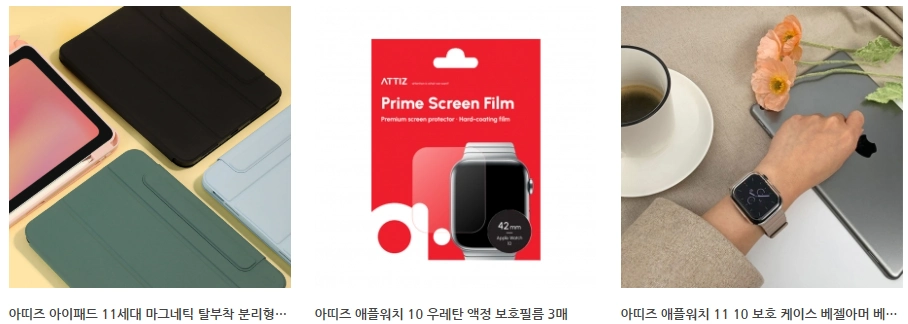
[Source: attiz Website]
'Surge in Uncollected Payments' and 'Depletion of Working Capital' Trigger Insolvency Crisis Despite Surplus
The fundamental reason the company applied for rehabilitation to the court was not operating deficits, but rather liquidity paralysis caused by a rapid depletion of working capital. While the income statement showed an operating profit of 190 million won in 2025, the actual cash flow from operating activities that flowed into the company was minus (-) 1.806 billion won, marking the worst possible state.
The biggest blow came from commercial receivables. Trade receivables, which stood at around 618 million won at the end of 2024, surged by nearly 3 billion won to 3.607 billion won at the end of 2025. This means that a massive amount of funds became tied up as uncollected payments, as the company failed to collect the proceeds even after selling its goods. On the other hand, advances from customers, a source of short-term cash inflow, plummeted from 1.125 billion won in 2024 to 243 million won in 2025, further tightening the company's funding pipeline. As a result, cash and cash equivalents held by the company at the end of 2025 amounted to merely 352 million won.
High Dependence on Borrowings… Difficulties in Additional Fundraising Due to Exhausted Collateral Capacity
Behind the liquidity crisis lies a fragile financial structure that has overly relied on external borrowing. As of the end of 2025, the company's total liabilities were approximately 14.36 billion won, of which borrowings from financial institutions reached a total of 11.87 billion won, including 1.069 billion won in short-term borrowings, 311 million won in current portion of long-term debt, and 10.491 billion won in long-term borrowings. This amount is equivalent to 64% of the company's total assets (18.51 billion won). Due to the excessive debt, the interest expenses paid during the single year of 2025 alone reached 548 million won, pushing the company into a state where its generated operating profit (190 million won) could not even cover the interest.
The superficial debt-to-equity ratio sits at a level of 346%, and total equity is 4.148 billion won, but this too is far from actual financial soundness. Over half of the equity, amounting to 2.598 billion won, is a surplus resulting from land revaluation (an optical illusion effect), and the actual accumulated retained earnings are only 950 million won. A bigger problem is that there are no assets that can be liquidated. The book value of the factory and land is about 8.56 billion won, but collaterals (maximum debt amount) worth 8.15 billion won have already been established by financial institutions such as Industrial Bank of Korea and Busan Bank, completely exhausting any room for additional loans.
Must Prove Going Concern Value After the Commencement of Rehabilitation Proceedings
The most urgent task for Core Attiz to get back on track for normalization is 'recovering 3.61 billion won in trade receivables.' Currently, the allowance for bad debts set aside for these trade receivables is at the level of 219 million won (approximately 6%). If they are confirmed as normal receivables rather than co-insolvencies of business partners and are smoothly collected, it could serve as a reliable relief pitcher to provide some breathing room for the severely constrained company.
While it is true that the current situation is not easy, there are also views that it is too early to be pessimistic. Just a year ago in 2024, Core Attiz recorded about 9.5 billion won in sales and 700 million won in operating profit, proving the business viability of its core operations. Ultimately, the key is whether the company can readjust its excessively accumulated interest-bearing debt and recover tied-up funds to restore working capital through these rehabilitation proceedings. If it proves its 'going concern value'—its ability to survive independently—to the market and the court through bone-crushing financial restructuring, it is anticipated that the company will be able to overcome the crisis and seize an opportunity to stand up again.
Company financial data, investment reports, and startup analysis — all in one place
Explore PitchdeckCurated news, every week — straight to your inbox
Every Friday · Unsubscribe anytime