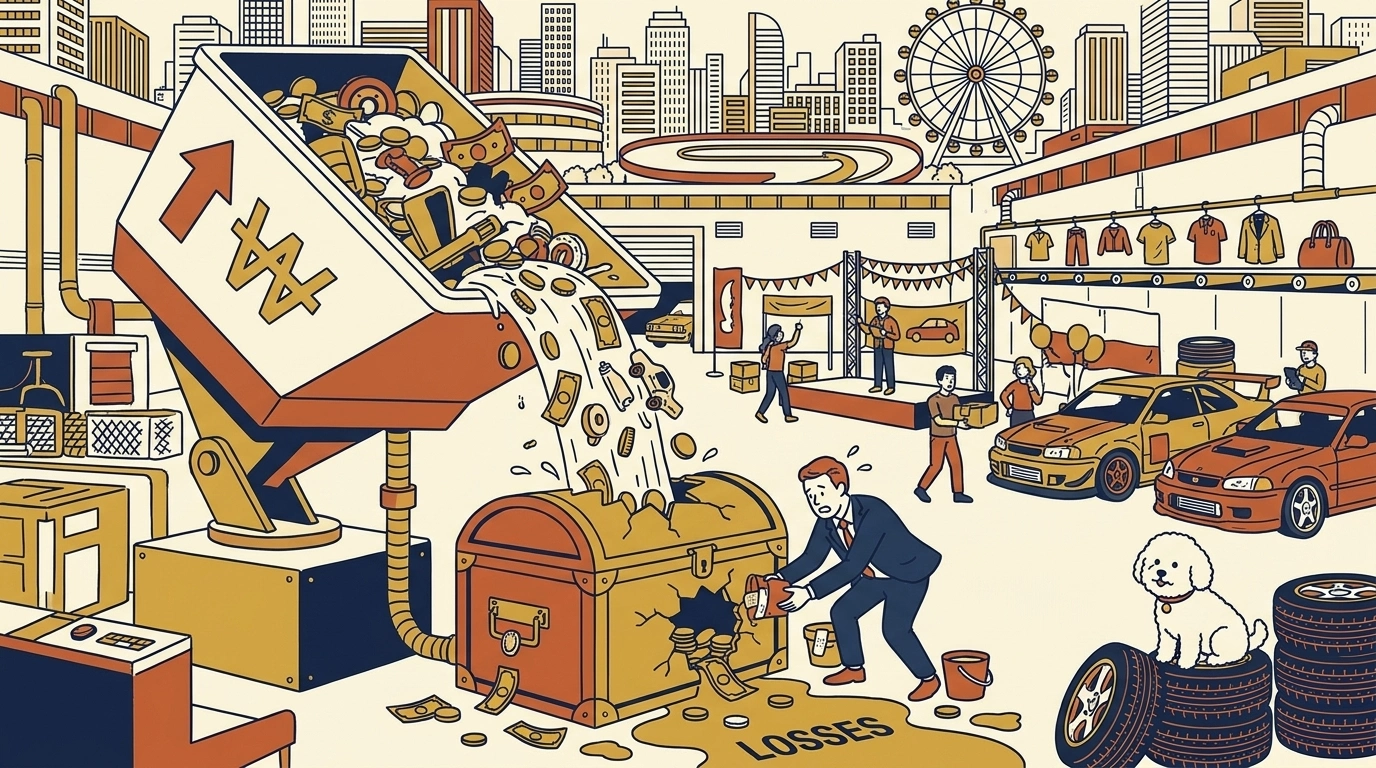
Peaches Group Korea, which has expanded street car culture into fashion, music, and spaces, has fallen into a financial crisis despite its outward growth. Although revenue increased by more than 70% in one year, the company recorded a net loss of 13.32 billion won due to a combination of event costs, unrecovered advance payments, and high-interest burdens.
CEO Yeo In-taek paid off the 800 million won privately placed bonds that had passed their maturity date on behalf of the company. The company is covering its operational fund shortages through borrowings from the CEO and the issuance of new private bonds.
Established in 2018, Peaches Group Korea is a car culture-based lifestyle company. Starting with video and advertising production, as well as clothing and accessories sales, it has expanded its business to include the Seongsu-dong complex cultural space 'Dowon (D8NE)', the music festival 'One Universe Festival', and the car festival 'Peaches Run Universe'.
Its revenue in 2025 was 17.96 billion won, an increase of 70.3% from the previous year. Product revenue was the largest at 10.47 billion won, followed by other revenue at 3.7 billion won, event revenue at 2.32 billion won, and venue rental revenue at 980 million won.
However, the cost of goods sold reached 19.2 billion won, exceeding the revenue. While the company generated a profit of 4.03 billion won from product sales, larger losses occurred in the event and venue rental businesses. Combined with 7.81 billion won in selling and administrative expenses, including labor costs, rent, and commission fees, the operating loss grew to 9.06 billion won.
Event Revenue 2.32 Billion Won, Costs 10.59 Billion Won
The item that had the greatest impact on the deteriorating performance was the event business. Last year's event revenue was 2.32 billion won, but event costs reached 10.59 billion won. The loss, calculated by subtracting costs from revenue, was 8.27 billion won.
Although event revenue increased by 1.53 billion won from the previous year, event costs surged by 8.32 billion won. As the scale of events expanded, costs increased much faster than revenue.
The venue rental business also generated 980 million won in revenue against 1.73 billion won in costs, resulting in a loss of 740 million won. The combined losses from events and venue rentals amount to 9.02 billion won. This is a similar scale to the company's total operating loss of 9.06 billion won.
However, this loss cannot be attributed to a single specific event such as the One Universe Festival. Since event costs are not broken down by individual events, it is not possible to confirm how much revenue and cost each event generated.
There is also a possibility that the 3.7 billion won recorded as other revenue last year includes sponsorships, partnerships, or event settlement funds. The detailed composition of other revenue has not been disclosed. But even assuming the entirety of other revenue is income related to events and venue rentals, a loss of 5.31 billion won still remains in that business.
Considering that Peaches has utilized large-scale events and offline spaces as a means to raise brand awareness, it is difficult to conclude that all short-term losses are unexpected results. However, under the current financial situation, it has become necessary to manage profit and loss by event, showing how much cash is needed the more events are held, and how much of it can be recovered through sponsorships and ticket sales.
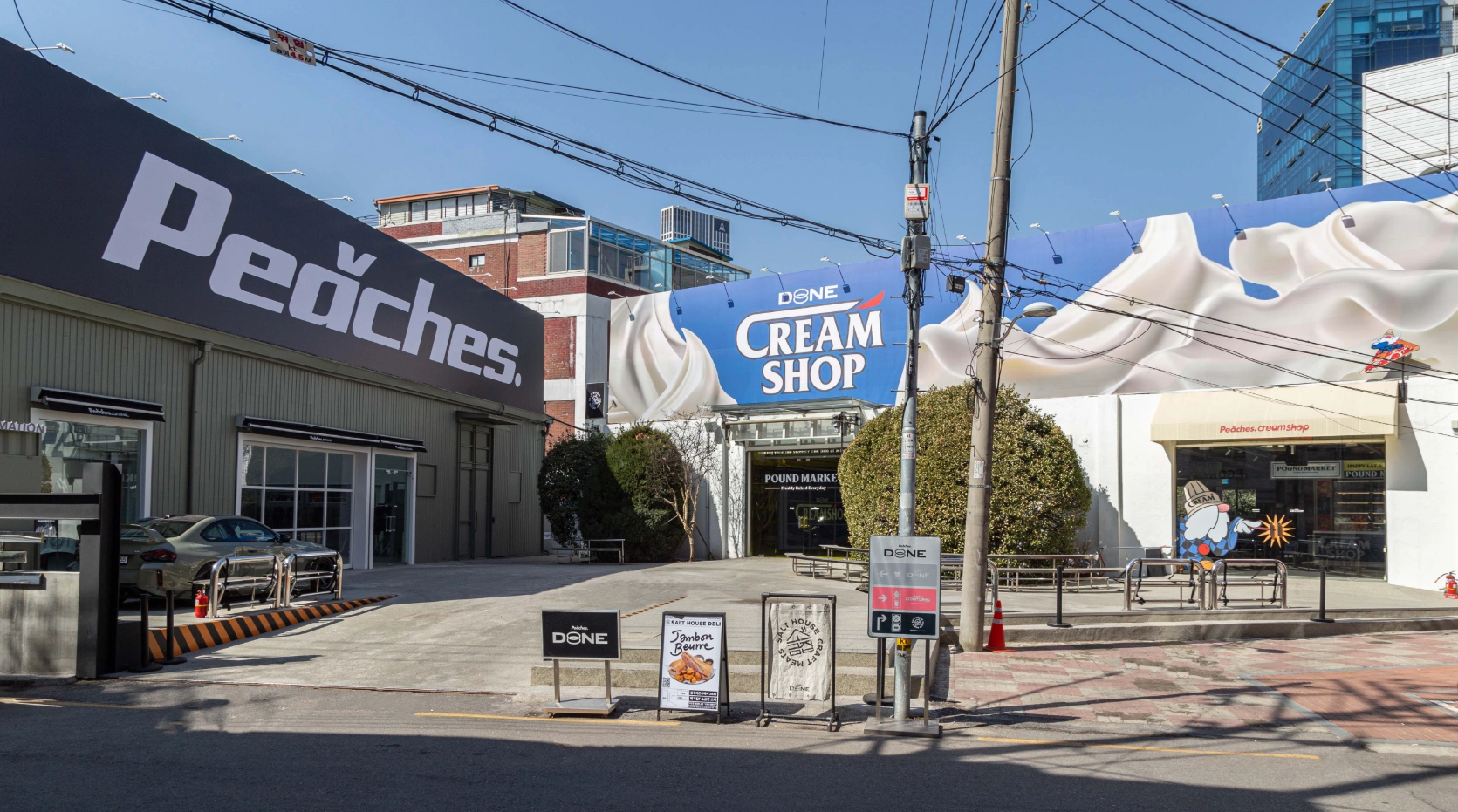
[Peaches Flagship Store Dowon (D8NE)], Source: Peaches Group Korea Website
3.61 Billion Won Paid in Advance Also Becomes Difficult to Recover
In addition to event costs, massive bad debt expenses increased the loss. Last year, the company converted 3.61 billion won in advance payments into accounts receivable, and then determined the same amount as unrecoverable receivables, writing it off as a loss.
Advance payments are funds paid in advance before receiving goods or services. It has not been disclosed to which business partners and for what purposes these funds were paid. However, it is confirmed that the company has determined it difficult to normally recover the 3.61 billion won.
Consequently, an allowance for bad debts was set for 4 billion won out of the 4.02 billion won in accounts receivable at the end of 2025. For inventory assets, a valuation loss was also reflected on 430 million won out of the 480 million won acquisition cost.
This indicates that along with cost control, problems have also occurred in the execution and recovery management of down payments and advance payments.
The losses led to a cash shortage. The cash outflow from operating activities last year reached 8.28 billion won. This means a monthly average of about 690 million won in cash was drained during operations.
At the end of 2025, current assets stood at 1.97 billion won, but current liabilities to be paid within a year were 15.47 billion won. Current liabilities exceeded current assets by 13.5 billion won. Cash and cash equivalents plummeted to the level of 300,000 won.
Total assets are 5.11 billion won, and total liabilities are 16.55 billion won. Since liabilities exceed assets by 11.43 billion won, total equity has turned negative. As the 1.89 billion won in equity capital at the end of 2024 was completely exhausted in just one year, the company entered a state of complete capital impairment.
Covering Fund Shortages with CEO Borrowings and Private Bonds
The company covered the fund shortage through borrowings. Last year, it newly raised 9.73 billion won in short-term borrowings and issued 7.3 billion won in private bonds. During the same period, it repaid 4.77 billion won in short-term borrowings and 4.9 billion won in corporate bonds.
Financial support from the CEO also continued. Last year, the company borrowed a total of 7.51 billion won from CEO Yeo and repaid 4.44 billion won. At the end of 2025, the balance of short-term borrowings from the CEO is 3.07 billion won.
The 800 million won 3rd private bond issued in August 2025 carried an annual interest rate of 20%. The maturity was November 28 of the same year, but it was not repaid within the deadline, and in January 2026, CEO Yeo paid it off on the company's behalf. While the debt the company owed to external bondholders was settled, the structure is such that the borrowings the company must repay to the CEO increased by the amount paid on its behalf.
In December 2025, the company also issued the 4th private bond of 1.7 billion won with an annual interest rate of 13.04%. Following this, in January 2026, it additionally raised 800 million won through the 5th private bond with an annual rate of 10.58%.
As high-interest borrowings increased, interest expenses surged from 150 million won in 2024 to 1.28 billion won last year. This resulted in a vicious cycle where the interest burden grew while no cash was coming in from operations.
The maturities for both the 4th and 5th private bonds were March 31, 2026. Whether the total of 2.5 billion won in bonds was actually repaid or their maturities extended cannot be confirmed from the currently disclosed data.
Improving Event Profitability and Securing Long-Term Funds Are the Keys
The company plans to push forward with financial and management improvements to achieve a stable operating profit. However, specific funding plans, such as attracting new investments, selling assets, or extending debt maturities, have not been disclosed.
The current financial risk was not caused simply by a lack of revenue. The company significantly increased its revenue last year, but event costs and bad debt expenses grew even faster. On top of this, the interest burden increased as the cash shortage was covered by short-term borrowings and high-interest private bonds.
For normalization, the company must first separate the income from tickets, sponsorships, booths, and merchandise sales for each event, and control performance fees, venue rental fees, stage installation costs, and operating expenses. It is necessary to operate the business based on how much cash it actually leaves behind, rather than the scale of the event.
Identifying the cause of the unrecovered advance payments and preventing further losses is also a challenge. If the structure that relies on CEO borrowings and short-term funds with 10-20% annual interest rates is not changed into long-term funds or equity capital, interest expenses could significantly erode the achievements even if operations improve.
Peaches Group Korea rapidly grew its outward size by expanding car culture into fashion, music, and spaces. Now, we root for them to create a financial structure that can sustain this growth, rather than just focusing on the speed of the brand's expansion, and to once again lead domestic car culture.
Company financial data, investment reports, and startup analysis — all in one place
Explore PitchdeckCurated news, every week — straight to your inbox
Every Friday · Unsubscribe anytime