
The first-generation startups that served as the pump primer for the domestic fintech and robo-advisor (RA) industry are facing a harsh survival test. While some are accelerating profitability improvements by achieving steady revenue expansion, others that once dominated the market are now confirmed to be driven into the stagnation of their core businesses and a severe capital impairment crisis. We examined the mixed growth potential and immediate financial soundness challenges of three companies representing the domestic robo-advisor and fintech market: December & Company, Quantec, and Uprise.
Business Models and Distinctly Diverging Top-line Growth Curves
These three companies settled into the market with their respective flagship services. December & Company led popularization with its AI-based non-face-to-face discretionary investment service 'Fint', Quantec has focused on the B2B2C business providing AI solutions to securities firms based on multiple commercialized RA algorithms, and Uprise is operating the robo-advisor 'DNDN' while shifting the weight of its business to the retirement pension market through its affiliated investment advisory firms.
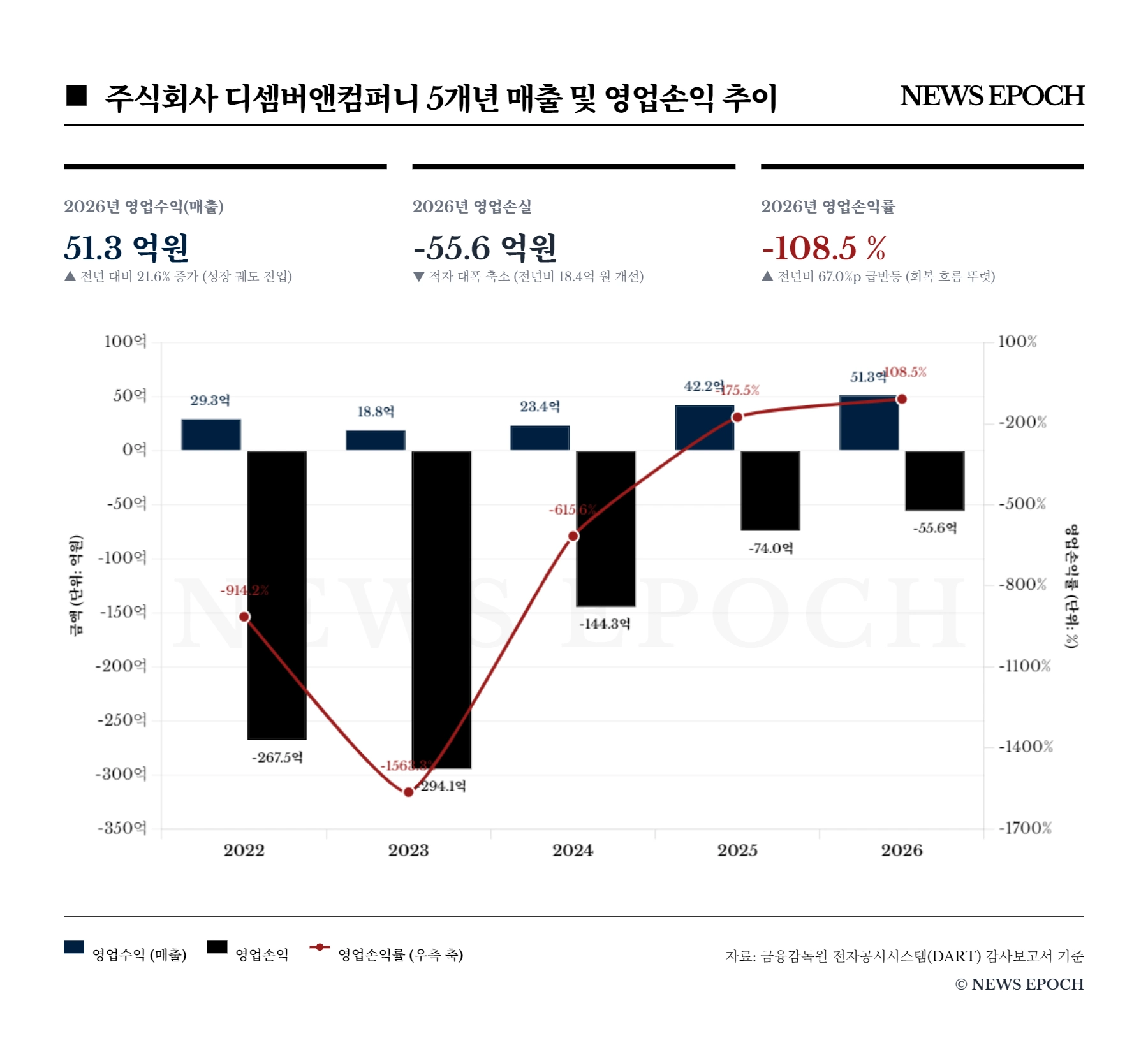
Looking at the revenue (operating revenue) flow, the three companies are starkly divided into two groups: growth and stagnant. December & Company is growing its top line, drawing an upward curve every year with its operating revenue recovering from a drop to 1.8 billion won in 2023 to 2.3 billion won in 2024, 4.2 billion won in 2025, and 5.1 billion won in 2026.
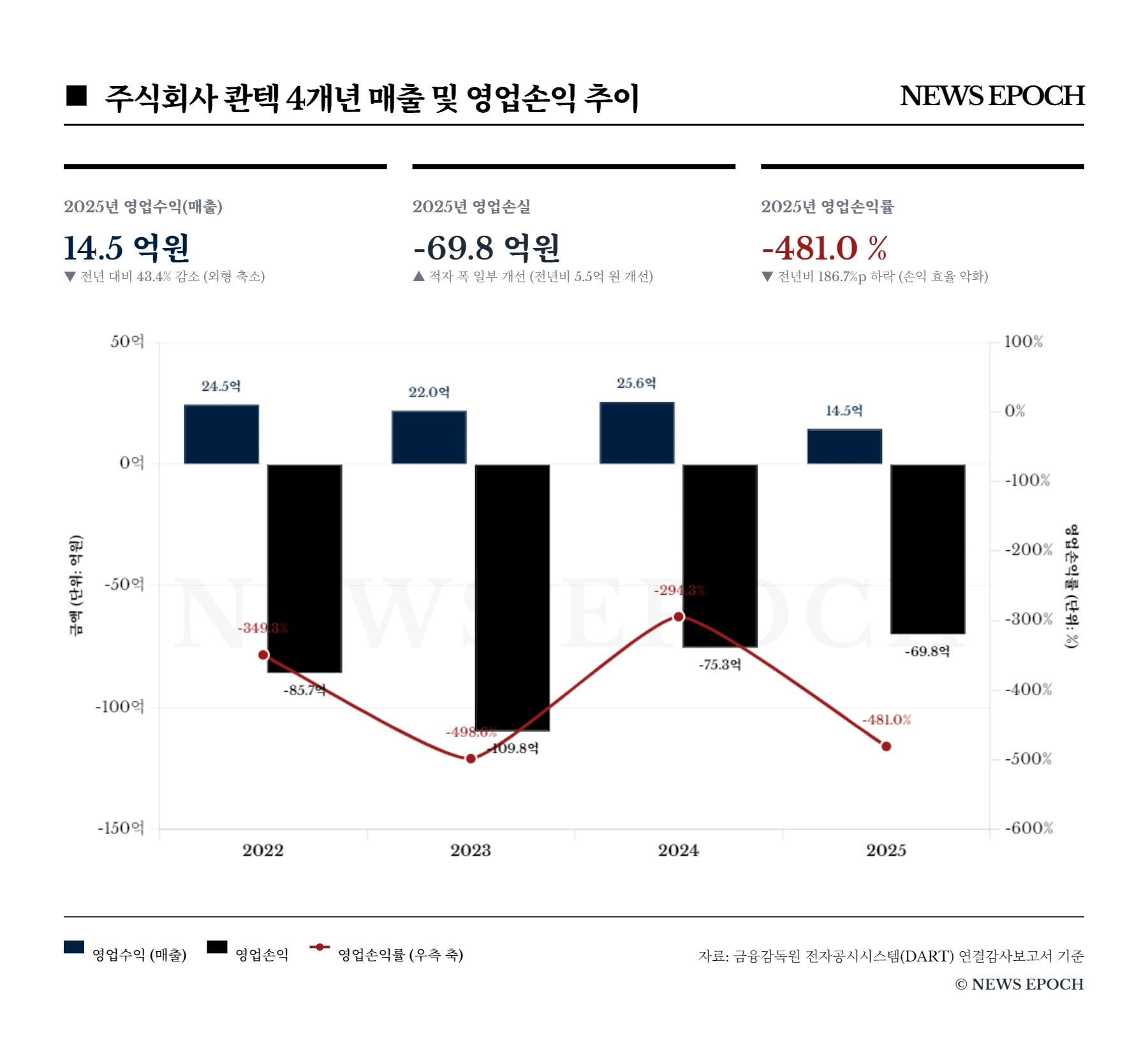
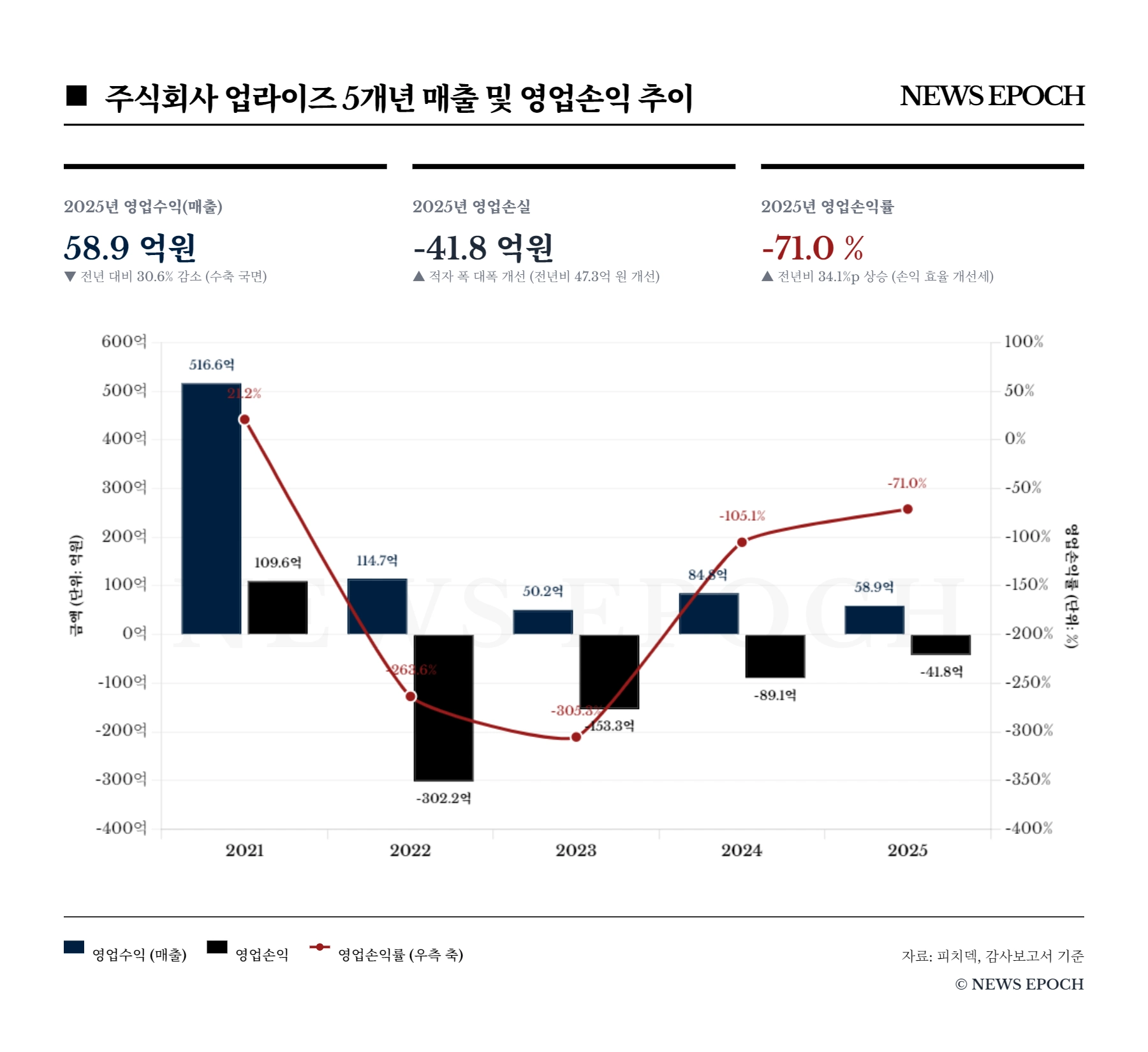
On the other hand, Quantec and Uprise are experiencing a decline or stagnation. Quantec saw its revenue peak at 2.5 billion won in 2024 before decreasing by about 43% in just one year to 1.4 billion won in 2025, as its core asset management fee revenue shrank. In Uprise's case, the revenue decline is even steeper. Driven by the virtual asset boom in 2021, it achieved an overwhelming revenue of 51.6 billion won, but it took a direct hit from changes in the market environment and was pushed back to the level of 5.0 billion won in 2023 and 5.8 billion won in 2025. It is stuck in a swamp of stagnation with its top line at one-tenth of its peak level.
Three Companies, Three Causes of Deficit and Hidden Detonators in the Books
While all three companies share the fact that they are recording chronic operating deficits, the fundamental causes of the costs inducing the deficits and the hidden inside stories behind their financial statements differ for each company.
December & Company is dramatically reducing its deficit through an intense 'SG&A diet' following a change in major shareholders. It aggressively cut advertising and promotional expenses, which used to be poured in at several times its sales, from 1.12 billion won in 2024 to the 200 million won level in 2025. As a result, its operating loss, which reached 29.4 billion won in 2023, was reduced to 5.56 billion won in 2026. A particularly notable point is its office sublease transaction with Forest Partners and Forest Ventures under its governance structure. It proportionally removed the right-of-use asset for the leased real estate based on the affiliate's area ratio and recorded the sublease rent to be received as 'finance lease receivables (2.6 billion won)' and 'sublease deposits (1.4 billion won)'. In addition, fully recognizing an impairment loss on approximately 3.0 billion won in development costs previously recognized as assets to preemptively eliminate intangible asset risks is evaluated as a positive financial activity.
Quantec is suffering from a double whammy of a lack of operational efficiency and debt pressure caused by complex financial instruments. Compared to its core business revenue (1.45 billion won), its operating expenses (8.42 billion won), such as platform maintenance and commission fees, are so large that it has a structure where deficits accumulate the more it operates. There is also an 'optical illusion of debt' according to K-IFRS accounting standards. Redeemable Convertible Preference Shares (RCPS) of 12.82 billion won are booked as liabilities rather than equity, and derivative liabilities (15.14 billion won) reflecting the value of convertible bonds and investor put options are added, causing distortion in the financial structure. With its year-end cash depleted to less than 100 million won, Quantec is struggling to plug cash outflows to the outside, such as by abruptly converting its retirement benefit system from a Defined Benefit (DB) to a Defined Contribution (DC) plan to ease its debt burden.
Traces of restructuring can be seen in Uprise. It lowered labor costs from 9.8 billion won in 2022 to the 3.0 billion won level in 2025, defending its operating deficit at 4.17 billion won. However, the parent company's efforts to improve performance are being diluted by the sluggishness of its subsidiaries. Due to the equity method losses (870 million won) from subsidiaries and investees occurring every year, an inversion phenomenon where the net loss (5.59 billion won) is greater than the operating loss has become entrenched. A warning light has also turned on for securing liquidity cash. As 81% of its 4.49 billion won in current assets is tied up in trade receivables (3.65 billion won), it is failing to collect money on time, and with 480 million won already set aside as an allowance for bad debts, collection uncertainty is high.
Financial Stability Facing a Marginal Situation... "Additional Capital Injection Needed"
These cost structures and hidden risks are pressuring the companies' liquidity. December & Company is in a risk management zone, with its total equity decreased to 2.2 billion won due to accumulated deficits. Although it has gained breathing room by controlling cash outflows from operating activities to a level of 200 million to 300 million won annually, it seems to need a financial structure improvement to prevent capital depletion.
Uprise and Quantec are in a marginal situation of complete capital impairment. Uprise's accumulated deficit (-56.5 billion won) has eaten up all its surplus, leaving its total equity at a mere 300 million won. Since it is difficult to hold out with available cash-equivalent assets, it will fall into complete capital impairment unless capital expansion, such as a large-scale paid-in capital increase, is supplied within a few months. Quantec, which is already in a state of complete capital impairment, has an accumulated deficit of 42.3 billion won, with total liabilities exceeding total assets by a whopping 26.8 billion won; it has the highest financial risk among the three companies, and its auditing firm has raised uncertainty about its ability to continue as a going concern.
These first-generation fintech and major robo-advisor startups pioneered a new path of AI and algorithms in the barren domestic financial market. However, they still face the realistic walls of a heavy cost structure and capital depletion without having perfectly achieved economies of scale. Attention is focused on whether they will be able to overcome the tasks of intense restructuring and securing financial soundness to leap forward once again as the leading players in the market.
Company financial data, investment reports, and startup analysis — all in one place
Explore PitchdeckCurated news, every week — straight to your inbox
Every Friday · Unsubscribe anytime